


Master the Design Rights Application Process Easily

Facing the challenges of safeguarding unique designs can be daunting for innovative technology startups operating across global markets. Protecting intellectual property requires a clear understanding of legal standards, such as novelty and non-obviousness, highlighted by the United States Patent and Trademark Office’s guidance on design eligibility. This article outlines the essential steps for securing design rights protection, combining practical strategies and digital tools to help you build a defensible portfolio that meets American and international requirements.
Table of Contents
Quick Summary
Key Point | Explanation |
1. Thoroughly assess design eligibility | Examine originality, non-obviousness, ornamental character, and manufacturability for legal design protection. |
2. Prepare comprehensive documentation | Compile a detailed design description, technical drawings, and formal applications to support your design rights claim. |
3. Submit your application carefully | Verify all materials and fees, choosing the best method for submission to ensure a smooth filing process. |
4. Monitor application status actively | Track progress and respond quickly to any feedback from patent examiners to enhance approval chances. |
5. Maintain ongoing design rights protection | Implement monitoring, renewal management, and legal strategies to uphold your design’s market value and exclusivity. |
Step 1: Assess eligibility for design rights protection
Designing a powerful strategy for design rights protection starts with understanding your intellectual property’s unique characteristics and legal requirements. The process demands careful evaluation to ensure your design qualifies for robust legal protection.
To determine eligibility, you’ll need to examine several critical factors that determine whether your design meets design patent registration standards. The key criteria include:
Originality: Your design must be demonstrably new and distinctive
Non-obviousness: The design cannot be an obvious variation of existing designs
Ornamental character: The design must have aesthetic significance beyond mere functionality
Manufacturability: The design must be capable of being reproduced in an industrial context
The United States Patent and Trademark Office provides specific guidelines for assessing design rights. These standards require a comprehensive review that goes beyond surface-level assessment. You’ll want to conduct a thorough novelty search to confirm no similar designs exist in public domain or prior registered patents.
A meticulously prepared design rights application can significantly enhance your intellectual property’s legal defensibility and market value.
International protection adds another layer of complexity. Different jurisdictions have varying requirements, so understanding regional nuances becomes crucial for comprehensive design rights strategy.
Here’s a summary of how US and international design rights protections differ:
Aspect | US Design Rights | International (Hague System) |
Application Process | Direct filing with USPTO | Single application covers many countries |
Eligibility Criteria | Strict, detailed review | Varies by country, broader standards |
Documentation | Specific, formal requirements | Flexible, with variations by jurisdiction |
Cost & Fees | Fixed USPTO fee structure | Multiple fees, may depend on scope |
Coverage | U.S. only (unless extended) | Multiple jurisdictions, global reach |
Pro tip: Invest in a professional novelty search before filing your application to minimize potential rejection and streamline the registration process.
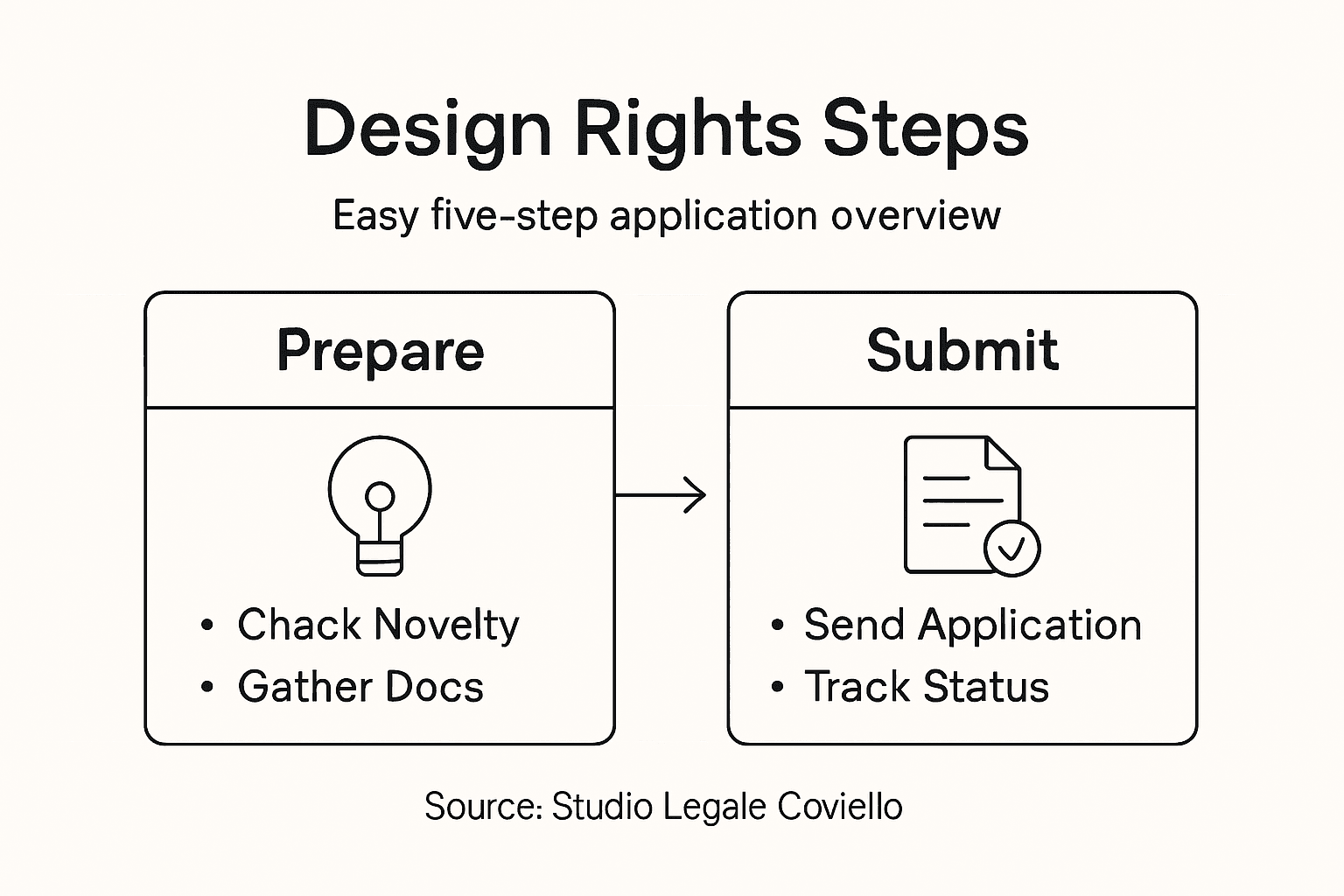
Step 2: Prepare essential documentation for submission
Navigating the design rights application process requires meticulous documentation preparation. Your goal is to create a comprehensive application package that clearly communicates your design’s unique attributes and legal significance.
To succeed, you’ll need to compile a detailed set of essential regulatory documents. Your documentation toolkit should include:
Detailed design description: A comprehensive narrative explaining the design’s unique characteristics
Technical drawings: Precise, high-quality illustrations showing multiple design angles
Photographic evidence: Professional images demonstrating the design’s aesthetic and functional aspects
Signed declarations: Formal statements verifying the design’s originality
Formal application forms: Completed official paperwork from the patent office
Preparing these documents demands precision and attention to detail. Each component must be carefully crafted to demonstrate the design’s novelty and industrial applicability. Professional documentation can significantly strengthen your application’s chances of approval.
Comprehensive and accurate documentation is the foundation of a successful design rights application.
Organize your documents systematically, creating a clear and logical presentation that allows reviewers to quickly understand your design’s unique value. Consider creating a regulatory binder with clearly labeled sections to facilitate smooth review.

Pro tip: Consult with an intellectual property specialist to review your documentation package before submission to identify and address potential weaknesses.
Step 3: Submit your application to relevant authorities
Submitting your design rights application marks a critical milestone in protecting your intellectual property. This stage transforms your carefully prepared documentation into an official legal claim for design protection.
You have multiple submission options, including electronic filing procedures with varying requirements depending on your jurisdiction. The submission process typically involves:
Verifying documentation completeness: Double-checking all required forms and supporting materials
Selecting submission method: Choosing between online portal, mail, or in-person filing
Paying required fees: Submitting accurate application and processing fees
Tracking submission confirmation: Obtaining and preserving official receipt documentation
Preparing for potential follow-up: Anticipating potential requests for additional information
For international design rights, the World Intellectual Property Organization offers streamlined alternatives. The Hague System allows applicants to file a single application covering multiple countries, significantly simplifying the global registration process.
Strategic application submission can dramatically reduce processing time and increase your chances of successful design rights registration.
Carefully review submission guidelines for each relevant patent office, as requirements can vary significantly between jurisdictions. Some offices may require additional certifications or specific formatting for your documentation.
Pro tip: Create digital and physical backup copies of your entire application package before submission to protect against potential loss or administrative complications.
Step 4: Verify application status and address feedback
Tracking your design rights application requires consistent monitoring and prompt response to any official communications. Your ability to quickly address examiner feedback can significantly impact the success of your intellectual property protection.
Utilize the patent application tracking system to stay informed about your application’s progress. Key actions include:
Regular status checks: Review application progress at least every two weeks
Understanding office actions: Carefully analyze any official communication or request
Timely response: Prepare and submit required documentation within specified deadlines
Maintaining comprehensive records: Document all interactions and submissions
Professional communication: Craft clear, concise responses to examiner inquiries
Most patent offices provide digital platforms that allow real-time tracking of application status. These systems typically offer detailed insights into each stage of the review process, including pending reviews, requested modifications, and potential next steps.
Proactive monitoring and swift, precise responses can dramatically accelerate your design rights registration process.
If you receive complex feedback or technical queries, consider consulting an intellectual property specialist who can help interpret and address specific examination concerns effectively.
Pro tip: Set up automated email alerts in the patent office tracking system to receive instant notifications about any changes or required actions.
Step 5: Secure finalized protection for your design assets
Reaching the final stage of design rights protection requires strategic implementation of comprehensive security measures. Your goal is to transform your registered design into a robust, defensible intellectual property asset.
Adopt a secure design framework that embeds protection mechanisms throughout your intellectual property lifecycle. Critical steps include:
International registration: Confirm coverage across all relevant jurisdictions
Defensive documentation: Maintain comprehensive records of design creation and registration
Monitoring strategies: Implement ongoing surveillance for potential infringements
Legal preparedness: Develop clear enforcement protocols for potential violations
Renewal management: Track and proactively renew design rights before expiration
The registration process extends beyond initial approval. Continuous protection requires active management and strategic legal positioning to maintain your design’s exclusive rights and market value.
Below is a quick reference to essential actions for maintaining your registered design assets:
Action | Purpose | Business Impact |
Monitor for infringements | Detect unauthorized use | Protects market exclusivity |
Renewal management | Maintain legal protection | Prevents loss of rights |
Update documentation | Ensure legal readiness | Supports enforcement claims |
Legal preparedness | Enable quick response | Reduces litigation risks |
Effective design rights protection is an ongoing process, not a one-time event.
Consider working with an intellectual property specialist who can provide tailored guidance on maintaining and defending your design assets across different legal jurisdictions.
Pro tip: Create a dedicated digital and physical archive of all design documentation, including original sketches, registration certificates, and correspondence, to strengthen your legal position.
Streamline Your Design Rights Application with Expert Legal Support
Navigating the complex process of securing design rights requires careful attention to originality, precise documentation, and proactive application management. If you find yourself overwhelmed by the strict eligibility criteria, intricate submission requirements, or the ongoing monitoring and enforcement steps outlined in the article “Master the Design Rights Application Process Easily,” you are not alone. Common challenges include preparing comprehensive technical drawings, responding effectively to patent office feedback, and ensuring international protection across multiple jurisdictions.
At Studio Legale Coviello, we specialize in intellectual property law and provide tailored legal and technical consultancy to help companies and individuals protect valuable design assets with confidence. Our use of cutting-edge technologies, including artificial intelligence and innovative digital tools, simplifies the management of your design rights throughout the entire lifecycle. We understand the critical importance of accuracy, thoroughness, and timely responses to secure and maintain your intellectual property.
Take control of your design rights process today. Visit Studio Legale Coviello to access expert guidance on every stage from eligibility assessment to final enforcement. Benefit from personalized legal strategies that reduce risks, accelerate approvals, and maximize the value of your designs across international markets. Discover how our innovative approach can transform your intellectual property journey now.
Frequently Asked Questions
What are the key eligibility criteria for design rights protection?
Your design must meet several key criteria to qualify for protection, including originality, non-obviousness, ornamental character, and manufacturability. Start by evaluating your design against these factors to confirm its eligibility.
How can I prepare essential documentation for my design rights application?
To prepare your application documentation, compile a detailed design description, high-quality technical drawings, and photographic evidence, along with signed declarations and formal application forms. Organize these documents systematically to create a comprehensive application package.
What steps should I follow to submit my design rights application?
Submit your application by verifying the completeness of your documentation, selecting your submission method, and paying the required fees. Track your submission confirmation to ensure all components are received properly.
How can I track the status of my design rights application after submission?
Regularly check the status of your application at least every two weeks using the tracking system provided by the patent office. Prepare to analyze any official communication or requests for additional information sent by the examiner.
What actions can I take to secure finalized protection for my design assets?
To secure protection for your design assets, implement monitoring strategies for potential infringements, manage renewals proactively, and maintain comprehensive records of your design’s documentation. Establish clear enforcement protocols to address potential violations swiftly.
When should I consult an intellectual property specialist during the design rights application process?
Consider consulting an intellectual property specialist at multiple points, such as when preparing your application documentation or if you receive complex feedback from the patent office. Their expertise can help you navigate the intricacies of the application process and enhance your chances of success.
Recommended

Comments