


How to Protect Intellectual Property for Innovators

More than 85 percent of tech start-ups risk losing critical innovations without strong intellectual property protection. For founders in Italy and the UAE, scaling food tech and gaming ideas puts your creations squarely in the spotlight, just like American innovators who understand IP is business fuel. Here you will find practical steps to document, secure, and actively defend your intellectual property as your company grows.
Table of Contents
Quick Summary
Important Insight | Explanation |
1. Identify Your IP Assets | Conduct a thorough inventory of all intellectual property, documenting each asset’s development and uniqueness. |
2. Choose IP Protection Wisely | Understand and select the right type of IP protection for each asset to ensure maximum legal advantages. |
3. Implement Security Measures | Establish robust digital and physical security protocols to safeguard against unauthorized access and potential infringements. |
4. Monitor for Infringements | Regularly surveil markets for potential violations of your IP rights to act quickly against unauthorized use. |
5. Review Your Strategy Regularly | Schedule annual assessments of your IP portfolio to adapt to market changes and optimize protection strategies. |
Step 1: Identify and Document Your Intellectual Property
Protecting your innovative work starts with comprehensive identification and meticulous documentation. Identifying intellectual property involves recognizing the unique creations that distinguish your business and have potential commercial value.
Begin by conducting a systematic inventory of your intellectual assets. This includes inventions, software code, design concepts, logos, marketing materials, and any original works that represent your company’s innovation. Categorize these assets into specific intellectual property types such as patents, copyrights, trademarks, and trade secrets. Document each asset thoroughly by creating detailed records that capture the development process, including dates of conception, iterations, prototypes, and key milestones.
Maintain comprehensive documentation through methods like dated design notebooks, digital timestamps, witness signatures, and secure digital archives. These records serve as critical evidence of your originality and can provide crucial legal protection if your intellectual property is challenged or infringed upon.
Pro tip: Create a centralized digital repository with strict access controls to securely track and timestamp all your intellectual property documentation.
Step 2: Select and Apply for Proper IP Protections
Selecting the right intellectual property protection is crucial for safeguarding your innovative work. Patent protection requires careful consideration of your invention’s unique characteristics and potential commercial value.
Start by thoroughly understanding the different types of intellectual property protections. Patents are ideal for new inventions that are novel, useful, and non-obvious. Trademarks protect brand identifiers like logos and company names. Copyrights automatically protect original works of authorship such as software, artistic creations, and written content. Trade secrets offer protection for confidential business information that provides a competitive advantage.
Each protection type demands a specific application process. For patents, you’ll need to conduct a comprehensive prior art search to ensure your invention is truly unique. Trademark applications require clearance searches and detailed documentation of your brand elements. While copyrights are automatically established upon creation, registration provides enhanced legal enforcement options. Trade secrets demand rigorous internal confidentiality measures and strategic information management.
Pro tip: Consult with an intellectual property attorney to develop a comprehensive protection strategy tailored to your specific innovations and business goals.
Here’s a comparison of the four main types of intellectual property protection and when each is most beneficial:
IP Type | Typical Use Case | Key Benefit |
Patent | New inventions, technical ideas | Exclusive commercial rights |
Trademark | Logos, brand names, symbols | Brand identity and reputation |
Copyright | Software, written/artistic works | Automatic creative rights protection |
Trade Secret | Confidential business knowledge | Long-term competitive advantage |
Step 3: Implement Digital and Physical Security Measures
Protecting your intellectual property requires a comprehensive approach to security that addresses both digital and physical vulnerabilities. Cybersecurity incident prevention is crucial for safeguarding your most valuable innovations.
Start by establishing robust digital security protocols. Implement advanced firewall systems, encryption technologies, and access control mechanisms that limit sensitive information to authorized personnel only. Use multi factor authentication, create strong password policies, and regularly update security software to prevent potential breaches. Monitor network activities continuously and develop incident response plans that outline precise steps for addressing potential security threats.

Physical security is equally important. Secure physical spaces where intellectual property is developed or stored by implementing controlled access systems, surveillance cameras, and secure storage solutions. Develop strict visitor protocols, use locked file cabinets and secure server rooms, and create comprehensive tracking systems for sensitive documents and prototypes. Implement employee training programs that educate your team about security risks and best practices for protecting confidential information.
Pro tip: Conduct regular security audits and penetration testing to proactively identify and address potential vulnerabilities in your digital and physical security infrastructure.
Step 4: Monitor and Enforce Intellectual Property Rights
Protecting your intellectual property is an ongoing process that requires constant vigilance and strategic action. Proactive IP rights enforcement is essential to maintaining the value of your innovative assets.
Develop a comprehensive monitoring strategy that includes regular market surveillance, online platform searches, and automated tracking technologies. Set up alerts for potential unauthorized uses of your intellectual property across digital and physical marketplaces. This might involve using specialized software tools that scan global markets, online platforms, and social media channels for potential infringements. Pay special attention to emerging markets and international territories where intellectual property protections might be less stringent.
When potential infringements are detected, respond strategically. Begin with cease and desist letters that formally document the unauthorized use and demand immediate action. Explore negotiation and licensing opportunities before escalating to legal proceedings. Consider alternative dispute resolution methods such as mediation, which can often resolve conflicts more efficiently and cost effectively than traditional litigation. Maintain detailed documentation of all potential infringement instances, as this evidence becomes crucial if legal action becomes necessary.
Pro tip: Create a dedicated internal team or partner with specialized intellectual property monitoring services to ensure comprehensive and continuous protection of your innovative assets.
For quick reference, here are essential actions to monitor and enforce your intellectual property rights effectively:
Action | Purpose | Example Tool or Method |
Market Surveillance | Detect misuse of IP in the market | Automated monitoring software |
Online Platform Searches | Identify online infringement | Website and social media scans |
Cease & Desist Notices | Address violations formally | Legal correspondence |
Alternative Dispute Methods | Resolve conflicts efficiently | Mediation or arbitration |
Step 5: Review and Update Your IP Strategy Regularly
Successful intellectual property management requires continuous adaptation and strategic reassessment. Intellectual property rights globally demand proactive and dynamic approaches to protection and management.
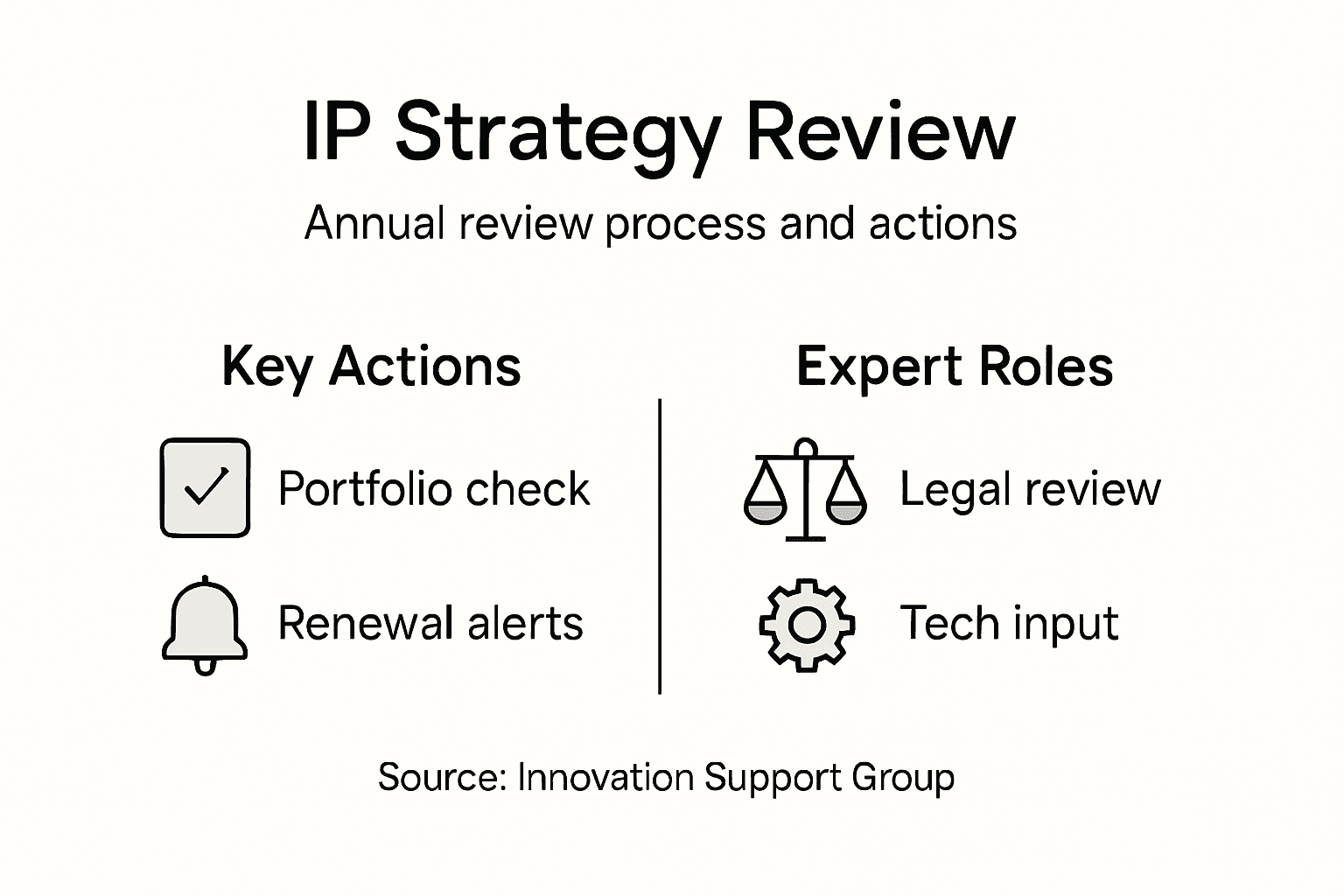
Establish a systematic review process that evaluates your intellectual property portfolio at least annually. This comprehensive assessment should examine each IP asset for its current relevance, market value, and alignment with your evolving business strategy. Track upcoming registration and renewal deadlines, assess the competitive landscape, and identify potential gaps or opportunities in your existing IP protection. Consider emerging technologies, market shifts, and changes in legal frameworks that might impact your intellectual property rights.
Engage multidisciplinary expertise during these strategic reviews. Collaborate with legal counsel, technology experts, market researchers, and business strategists to develop a holistic understanding of your IP landscape. Analyze the financial performance of your IP assets, evaluate potential licensing opportunities, and determine whether current protections adequately safeguard your innovations. Be prepared to adjust your strategy quickly, whether that means expanding protection in new markets, modifying existing registrations, or divesting less valuable intellectual property assets.
Pro tip: Create a dynamic tracking system that automatically flags upcoming renewal dates, legal changes, and potential market opportunities for your intellectual property portfolio.
Secure Your Innovations with Expert Intellectual Property Support
Protecting intellectual property is a complex journey that demands precise identification, strategic application, and vigilant enforcement. As the article highlights, innovators face challenges such as choosing the right protections for patents or trademarks and implementing robust security measures to guard valuable assets. At Studio Legale Ecoviello, we understand the emotional weight and business impact of these challenges. Your inventions and creative works deserve tailored legal guidance combined with cutting-edge technology to ensure lasting protection and competitive advantage.

Don’t leave your intellectual property to chance. Benefit from our expertise in consulting on patents, trademarks, copyrights, and industrial designs as well as our innovative digital tools designed to streamline rights management. Act now to safeguard your assets with confidence and clarity. Visit Studio Legale Ecoviello today and take the first step toward a secure and profitable IP future.
Frequently Asked Questions
How do I identify and document my intellectual property?
To identify and document your intellectual property, start by conducting a systematic inventory of your innovations, including inventions, logos, and marketing materials. Create detailed records that capture the development process, including dates, prototypes, and key milestones.
What are the different types of intellectual property protections available?
The main types of intellectual property protections are patents, trademarks, copyrights, and trade secrets. Each type suits different assets; for instance, patents protect inventions, while trademarks safeguard brand names and logos. Choose the appropriate type based on your creation’s nature and commercial potential.
How can I enhance the security of my intellectual property?
To enhance your intellectual property’s security, implement strong digital security protocols such as firewalls, encryption, and access controls. Additionally, secure physical spaces with locked storage and surveillance, and conduct regular training sessions for employees on protecting confidential information.
What steps should I take if I discover an infringement of my intellectual property?
If you discover an infringement, respond by issuing a cease and desist letter to the party using your intellectual property without permission. Gather documentation of the infringement as evidence and consider negotiation or licensing opportunities before considering legal action.
How often should I review my intellectual property strategy?
You should review your intellectual property strategy at least once a year. This review should assess the relevance and value of each IP asset, track renewal deadlines, and identify any gaps in protection, allowing you to adjust your strategy as necessary.
What is a practical first step for innovators wanting to protect their intellectual property?
A practical first step is to create a centralized digital repository for your intellectual property documentation. Ensure it’s securely managed and includes clear timestamps and access controls to maintain an accurate record of your innovations.
Recommended

Comments