


How to Secure Design Rights for Global Market Success

Introducing a bold design to global markets calls for more than visionary thinking. Protecting originality and securing international growth require a careful legal strategy that starts with documenting every unique detail. For Italian and international tech start-ups, mastering the process of design element identification and documentation becomes your legal shield. This guide shows how thorough documentation, eligibility assessment, and smart filing pave the way for reliable design rights and confident market expansion.
Table of Contents
Quick Summary
Key Point | Explanation |
1. Document Original Design Elements | Record detailed design components to establish originality and ownership for legal protection and future defense against infringement. |
2. Assess Design Protection Eligibility | Evaluate your design for novelty and individual character before investing in registrations to ensure it meets jurisdictional requirements. |
3. Organize and File Applications Properly | Prepare accurate documentation and submit applications following local requirements to avoid rejections and ensure comprehensive protection. |
4. Implement Rights Management Tools | Use digital tools to monitor designs, track agreements, and manage renewals efficiently, reducing administrative burdens on your design portfolio. |
5. Actively Monitor and Enforce Rights | Set up a systematic monitoring program and be prepared to take legal action against infringements to maintain competitive advantage in the market. |
Step 1: Identify and Document Original Design Elements
This step sets the foundation for protecting your design internationally. You’re not just cataloging what exists; you’re creating a detailed record that proves originality, establishes ownership, and becomes critical evidence if you ever need to defend your rights. Think of this as building your design’s legal fingerprint.
Start by breaking down exactly what makes your design unique. Look beyond the obvious surface elements and examine the core components of design like line, shape, form, space, color, and texture. If you’re developing a product interface, document the specific layout decisions, the typography choices, the color palette you selected, and how whitespace guides the user’s eye. If it’s physical product design, capture the contours, proportions, material finishes, and three-dimensional forms that distinguish your creation from competitors. For packaging or graphic design, identify the unique combination of visual hierarchy, imagery, text arrangement, and decorative elements that work together to create your distinctive appearance.
Create multiple documentation formats for each design element. Photograph or capture high-resolution images from multiple angles, capturing lighting conditions that reveal texture and dimensional qualities. Write detailed descriptions explaining why each element matters, not just what it looks like. Include measurements, proportions, and ratios. If your design evolved through iterations, document that process too; it demonstrates originality and developmental thinking. Keep sketches, wireframes, mockups, and prototypes alongside finished versions. This comprehensive approach becomes invaluable when you file applications in different jurisdictions or need to prove your design predates a competitor’s similar work.
Practical tip: Create a master design documentation file with timestamped photographs, dimension specifications, color codes (hex values or Pantone numbers), and written descriptions of each unique element before filing any design registration applications across global markets.
Step 2: Assess Eligibility for Design Protection
Not every design qualifies for legal protection, and understanding what does is crucial before you invest time and money in registration. This step helps you determine whether your design meets the specific requirements of different jurisdictions, saving you from pursuing protection for elements that won’t actually qualify.
Start by evaluating your design against two core criteria: novelty and individual character. Your design must be new, meaning it hasn’t been publicly disclosed or sold anywhere before you file for protection. This includes any prior use, exhibition, or even posting online. Individual character means your design creates a distinctly different visual impression compared to existing designs already in the market. If your design is purely functional or primarily determined by technical requirements rather than aesthetic choices, it may not qualify. For example, a phone case that’s shaped exactly like a phone because of functional necessity alone won’t gain protection, but one with distinctive patterns, colors, or dimensional styling beyond what’s required will. Under the European Union regulation on Community designs, these requirements apply across all member states with a unified approach.
Next, consider where you plan to operate globally. If you’re targeting multiple countries, you can streamline the process through the WIPO Hague System for international design registration, which allows you to file once and receive protection in numerous member states simultaneously. Check whether your home country and target markets are part of this system, and verify that you meet basic eligibility requirements like having a genuine domicile or business address in a participating country. Different regions have slightly varying standards, so a design meeting European standards might need adjustment for United States or Asian markets. Document which jurisdictions are most important for your business growth, as this determines which protection systems to pursue.
Pro tip: Before filing anywhere, conduct a design search across your target markets using online design databases and competitor analysis to confirm your design truly offers novelty and individual character in those specific regions.
Step 3: Prepare and File Design Right Applications
This step transforms your documented design into formal legal protection by creating and submitting applications to the appropriate design offices. Getting this right means your design receives proper protection across your target markets, and getting it wrong can mean gaps in coverage or rejections that delay your market launch.
Begin by organizing your application materials systematically. You’ll need clear visual representations of your design, which typically include photographs or digital renderings from multiple angles showing the design in its best light. Write a concise design description that explains what someone is looking at without being overly technical. Include the product category, the specific elements you’re protecting, and any disclaimers about elements you’re not claiming protection for. Most design offices require standardized forms and specific file formats, so check the particular requirements for each jurisdiction where you’re filing. When working with the United States Patent and Trademark Office, understand that preparing design applications involves meeting specific documentation standards for visual representation and written descriptions. Similarly, the European Union Intellectual Property Office and other regional bodies each have their own formatting rules, so having a checklist prevents costly rejections and resubmissions.

Next, decide whether you’re filing directly in individual countries or using an international system. Filing in multiple countries individually takes time but may offer flexibility in tailoring applications to local requirements. The Hague System, which you learned about previously, consolidates multiple filings into one international application, saving time and reducing initial costs. Before submitting, conduct a final check: verify all images meet resolution and format requirements, ensure your written descriptions are accurate and complete, double-check filing fees for each jurisdiction, and confirm you have proper legal standing to file. Many startups and SMEs benefit from having a design attorney review applications before submission, as small errors can jeopardize protection. You can file electronically through most modern design offices, which speeds up processing and allows you to track status in real time. Keep detailed records of submission dates, application numbers, and deadlines for responding to office actions from examiners.
Pro tip: File in your home market first to establish a priority date, then within six months file internationally using the Paris Convention priority right, which ensures your original filing date applies globally and protects against competitors who might try to file similar designs during that window.
The following table compares two major options for international design registration:
Method | Process Overview | Main Advantage | Key Limitation |
National Filing | Submit applications to each country | Tailored to local laws | More time and expense |
Hague System | One application covers many countries | Streamlined and efficient | Not all jurisdictions covered |
Step 4: Leverage Digital Tools for Rights Management
Once your design rights are registered, the real work begins. You need systems in place to monitor where your designs appear globally, track licensing agreements, manage renewal deadlines, and respond quickly to infringement. Digital tools transform this from an overwhelming administrative burden into a manageable, automated process that protects your competitive advantage.
Start by implementing a centralized rights management system. This becomes your command center for everything related to your design portfolio. You’ll want to track which designs are registered in which jurisdictions, renewal dates for each registration, associated costs, and licensing agreements with partners or distributors. Spreadsheets work temporarily, but purpose-built intellectual property management software scales as your portfolio grows and offers features like automated deadline reminders, status tracking, and reporting. Beyond internal management, consider how you’ll monitor infringement in digital spaces. Many design-focused companies set up Google Alerts and monitor marketplaces like Amazon, Alibaba, and Etsy for unauthorized use of their designs. More sophisticated approaches use specialized monitoring services that scan millions of products daily. Understanding digital platforms’ role in rights management helps you establish transparent, effective enforcement strategies across the global digital landscape.
Next, evaluate emerging technologies that enhance protection and management. Blockchain technology can timestamp your designs and create immutable records of ownership and transactions. Artificial intelligence tools can help identify visually similar designs that might infringe your rights by analyzing images at scale. Some studios integrate these technologies to create comprehensive protection ecosystems. Also consider how you’ll manage relationships with design offices across different regions. Many offer online portals where you can renew registrations, view examination reports, and submit responses to office actions. Setting up organized filing systems for each jurisdiction prevents missing critical deadlines that could result in losing protection. Create templates for common tasks, maintain detailed spreadsheets of registration numbers and renewal dates, and consider using project management tools to coordinate activities across your team. For startups managing multiple design registrations internationally, this infrastructure becomes as important as the designs themselves.
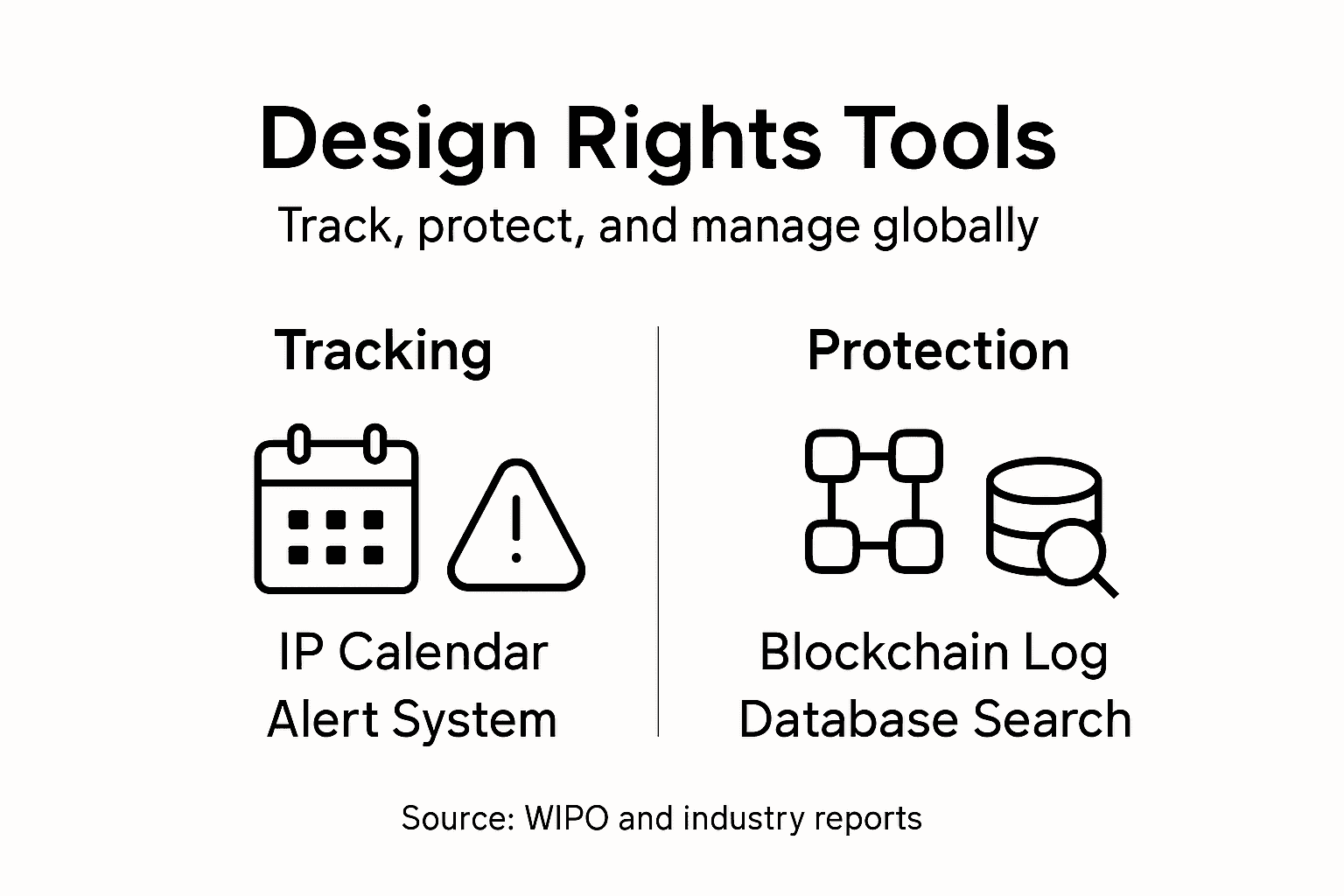
Pro tip: Implement a centralized intellectual property management calendar that automatically alerts you ninety days before each renewal deadline, allowing sufficient time to prepare payments and documentation across all jurisdictions where your designs are protected.
Here is a summary of common digital tools used for international design rights management:
Tool Type | Purpose | Key Benefit |
IP Management Software | Centralized design portfolio tracking | Automated reminders and reporting |
Online Monitoring Services | Scan digital marketplaces for infringements | Immediate detection of violations |
Blockchain Timestamping | Immutable design ownership records | Provides tamper-proof evidence |
AI Visual Search Tools | Identify visually similar design copies | Finds potential infringements fast |
Project Management Systems | Coordinate tasks and deadlines | Prevents missed renewals |
Step 5: Monitor and Enforce Design Rights Globally
Registering your design is only half the battle. The real protection comes from actively monitoring where your designs appear in the global marketplace and taking swift action when someone uses them without permission. This step ensures your registrations translate into actual competitive advantage and market control.
Begin by establishing a systematic monitoring program across your target markets. Set up alerts on major e-commerce platforms like Amazon, eBay, and regional marketplaces where your products compete. Use Google Alerts for your design name, product category, and key visual descriptors. Monitor social media platforms where competitors might showcase similar designs, and subscribe to industry trade publications that highlight new product launches. For more comprehensive coverage, consider using specialized intellectual property monitoring services that scan millions of products across platforms and jurisdictions daily, flagging potential infringements automatically. The scope of monitoring depends on your budget and how critical design protection is to your business, but even startups should cover their top three to five markets where revenue concentration is highest. Document everything you find, including screenshots, product URLs, seller information, and dates. This documentation becomes critical if you need to take enforcement action later.
When you identify potential infringement, your next steps depend on the severity and your enforcement strategy. The WIPO Hague System’s centralized registration mechanism simplifies managing your rights across multiple jurisdictions, making it easier to demonstrate ownership when contacting infringers. Start with a cease and desist letter, often handled by a local attorney in the infringer’s country, demanding they stop using your design and remove infringing products. Many companies respond to professional legal pressure without requiring litigation. If they don’t, you have options including filing infringement lawsuits in relevant jurisdictions, initiating customs procedures to prevent import of infringing goods, or requesting takedowns from e-commerce platforms under intellectual property violation policies. Online platforms increasingly respond quickly to substantiated infringement claims from registered design owners. Keep detailed records of every enforcement action you take, including communications, responses received, and outcomes. This creates a paper trail that strengthens your position in future disputes and demonstrates you’re actively enforcing your rights, which is sometimes required to maintain registration validity in certain jurisdictions.
Professional tip: Partner with a local design attorney in each major market who understands both your design protection status and local enforcement procedures, enabling rapid response when infringement occurs and preventing costly mistakes in enforcement attempts.
Secure Your Design Rights and Protect Your Global Innovation
Navigating the complexities of international design protection requires expert guidance to ensure your creations remain unique assets in competitive markets. The article highlights key challenges such as documenting original design elements, assessing eligibility, and managing enforcement on a global scale. If you seek to overcome obstacles like establishing novelty, meeting diverse jurisdictional requirements, or leveraging digital tools for rights management, professional legal support is essential. Protecting your design’s individual character and priority dates can mean the difference between market success and costly infringement disputes.
At Studio Legale Coviello, we specialize in intellectual property law with a sharp focus on industrial property and international commercial law. Our team offers tailored legal and technical consulting services that integrate cutting-edge technologies including artificial intelligence and blockchain to safeguard and manage your design rights efficiently. Whether you need assistance with filing international applications through systems like the Hague System or want to implement automated monitoring for infringement, we provide innovative solutions designed for your unique business needs.

Don’t let your designs go unprotected in a global landscape that demands vigilance and swift enforcement. Visit Studio Legale Coviello today to explore how our international IP expertise can secure your intellectual property portfolio and keep your innovations safe worldwide. Learn more about our comprehensive services and start protecting your business assets now at Studio Legale Coviello.
Frequently Asked Questions
How do I document the original design elements for protection?
To document your original design elements, create a detailed record that includes high-resolution images, measurements, and written descriptions. Capture all unique aspects, such as colors, shapes, and textures, ensuring you also document any design iterations. Start by compiling these elements into a master design file before pursuing registration.
What are the key criteria for assessing eligibility for design protection?
The key criteria for design protection are novelty and individual character. Your design must be new, meaning it has not been publicly disclosed or sold prior to filing, and it must create a distinctly different visual impression from existing designs. Evaluate your design against these criteria before investing in registration.
How should I prepare and file design right applications?
Prepare by organizing your application materials, ensuring you have clear representations of your design and concise descriptions of what you want to protect. Follow the specific requirements of each jurisdiction, and consider filing in your home market first to establish a priority date. Complete this preparation before submitting to maximize your chances of success.
What digital tools can I use for managing design rights?
Implement an intellectual property management software to track your design portfolio, including renewal dates and licensing agreements. This software can automate reminders and status tracking, reducing administrative burdens. Start by researching options and select one that scales with your design registrations.
How do I monitor and enforce my design rights globally?
Establish a systematic monitoring program to keep track of where your designs appear online and identify potential infringements. Utilize alerts on key platforms and consider specialized monitoring services for comprehensive coverage. Document your findings and be prepared to take action if infringements occur.
What steps should I take if I find an infringement of my design rights?
If you find an infringement, start by documenting the incident, including screenshots and product links. Next, send a cease and desist letter to the infringer, often with the help of local legal counsel. This initial step can lead to resolution without the need for litigation.
Recommended

Comments