


Streamline Your Intellectual Property Management Workflow

Protecting your latest innovations takes more than just paperwork when ambitions reach beyond Italy. For start-ups and SMEs targeting global growth, organizing and defending intellectual property can quickly feel overwhelming without the right strategy. Embracing a systematic approach to intellectual asset management using advanced legal technologies helps ensure every patent, trademark, and piece of know-how is properly cataloged, protected, and positioned for worldwide success.
Table of Contents
Quick Summary
Key Insight | Explanation |
1. Create an IP inventory | Develop a detailed catalog of all intellectual property assets, including patents, trademarks, and copyrights. |
2. Utilize legal technologies | Implement advanced legal tech platforms to automate and enhance IP management and compliance. |
3. Ensure secure tracking | Establish robust digital tracking systems with encryption and access controls to protect intellectual property. |
4. Maintain compliance records | Develop a thorough documentation verification framework to ensure ongoing legal compliance across jurisdictions. |
5. Monitor for infringements | Use automated systems for proactive detection and response to potential intellectual property violations. |
Step 1: Organize key intellectual property assets
Successfully managing intellectual property requires a strategic and systematic approach that protects your organization’s most valuable innovations. By implementing a robust organizational framework, you can effectively track, protect, and leverage your intellectual assets across different domains.
Begin by creating a comprehensive intellectual property inventory that catalogs all your current assets. This inventory should include detailed documentation for each type of intellectual property, such as:
Patents and patent applications
Registered trademarks
Copyright registrations
Trade secrets and proprietary know-how
Design rights
The European Union provides strategic management guidelines for systematically organizing intellectual assets across different sectors. These recommendations emphasize creating clear decision-making procedures and supporting tools to maximize value creation.
Effective IP management is not just about protection, but about creating a strategic framework that transforms intellectual assets into competitive advantages.
Implement a digital management system that allows centralized tracking, with clear access protocols and version control. Assign specific team members responsible for monitoring and updating the inventory, ensuring that no critical intellectual property details slip through the cracks.
Pro tip: Conduct a comprehensive IP audit annually to reassess your portfolio, identify potential gaps, and align your intellectual property strategy with current business objectives.
Step 2: Integrate advanced legal technologies
Transforming your intellectual property management requires strategically adopting cutting-edge legal technologies that can dramatically enhance efficiency and precision. Modern legal tech solutions offer unprecedented capabilities for tracking, analyzing, and protecting your most valuable intellectual assets.
Start by evaluating legal technology platforms that specialize in intellectual property management. These advanced systems typically provide features such as:
Automated patent and trademark tracking
AI-powered research and prior art discovery
Comprehensive IP portfolio management
Real-time global IP rights monitoring
Integrated document management and version control
Universities like Leiden are pioneering legal technology integration approaches that emphasize multidisciplinary strategies for utilizing digital tools in intellectual property protection. Their research highlights the critical importance of adopting technologies that can navigate complex regulatory landscapes.
Advanced legal technologies are not just tools, but strategic partners in managing and protecting intellectual property across global markets.
Implement AI-powered solutions that can perform complex tasks such as competitive intelligence gathering, risk assessment, and predictive analytics. These technologies can help you identify potential IP conflicts, track emerging market trends, and make more informed strategic decisions about your intellectual property portfolio.
Pro tip: Invest in comprehensive training for your team to ensure seamless adoption and maximize the potential of new legal technologies.
Step 3: Implement secure digital tracking systems
Protecting your intellectual property requires robust digital tracking systems that can safeguard your most critical assets from unauthorized access and potential breaches. Developing a comprehensive digital tracking strategy is essential for maintaining the integrity and confidentiality of your intellectual property portfolio.
Begin by implementing advanced security protocols that provide multi-layered protection for your digital IP assets. Key components of an effective tracking system should include:
Encrypted data storage
Granular access controls
Comprehensive audit trails
Biometric authentication mechanisms
Real-time threat detection systems
The European Commission’s research highlights digital tracking best practices that emphasize technological enablers for secure information management. These strategies focus on creating transparent and secure digital infrastructures that protect sensitive intellectual property across various platforms.
Digital tracking is not just about monitoring, but creating an impenetrable fortress around your most valuable intellectual assets.
Integrate Digital Rights Management (DRM) technologies that can provide intricate control mechanisms for your intellectual property. These systems allow you to set precise permissions, track usage, and automatically detect potential unauthorized distributions or access attempts.

Pro tip: Conduct regular security audits and penetration testing to identify and address potential vulnerabilities in your digital tracking systems before they can be exploited.
Here’s a summary of key digital security features and their organizational benefits:
Security Feature | Main Function | Organizational Benefit |
Encrypted data storage | Protects sensitive information | Prevents data theft and leakage |
Biometric authentication | Verifies user identity | Stops unauthorized system access |
Real-time threat detection | Monitors for cyber threats | Enables rapid response to risks |
Audit trails | Tracks user activity | Improves accountability and traceability |
Step 4: Verify rights and documentation compliance
Ensuring comprehensive documentation and legal compliance is a critical step in protecting your intellectual property across multiple jurisdictions. Your goal is to create a robust verification process that leaves no room for ambiguity or potential legal challenges.
Develop a systematic documentation verification framework that covers multiple dimensions of intellectual property rights. Your compliance checklist should include:
International registration certificates
Detailed ownership documentation
Jurisdiction-specific legal compliance records
Proof of original creation or invention
Comprehensive licensing agreements
Renewal and maintenance documentation
Researchers have demonstrated how artificial intelligence enhances IP compliance by dynamically monitoring regulatory frameworks and validating documentation across different legal environments.
Compliance is not a one-time event, but a continuous process of vigilance and proactive management.
Implement a cross-functional review process that involves legal experts, technical specialists, and compliance officers. This multidisciplinary approach ensures that every aspect of your intellectual property documentation meets the highest standards of accuracy and legal defensibility.
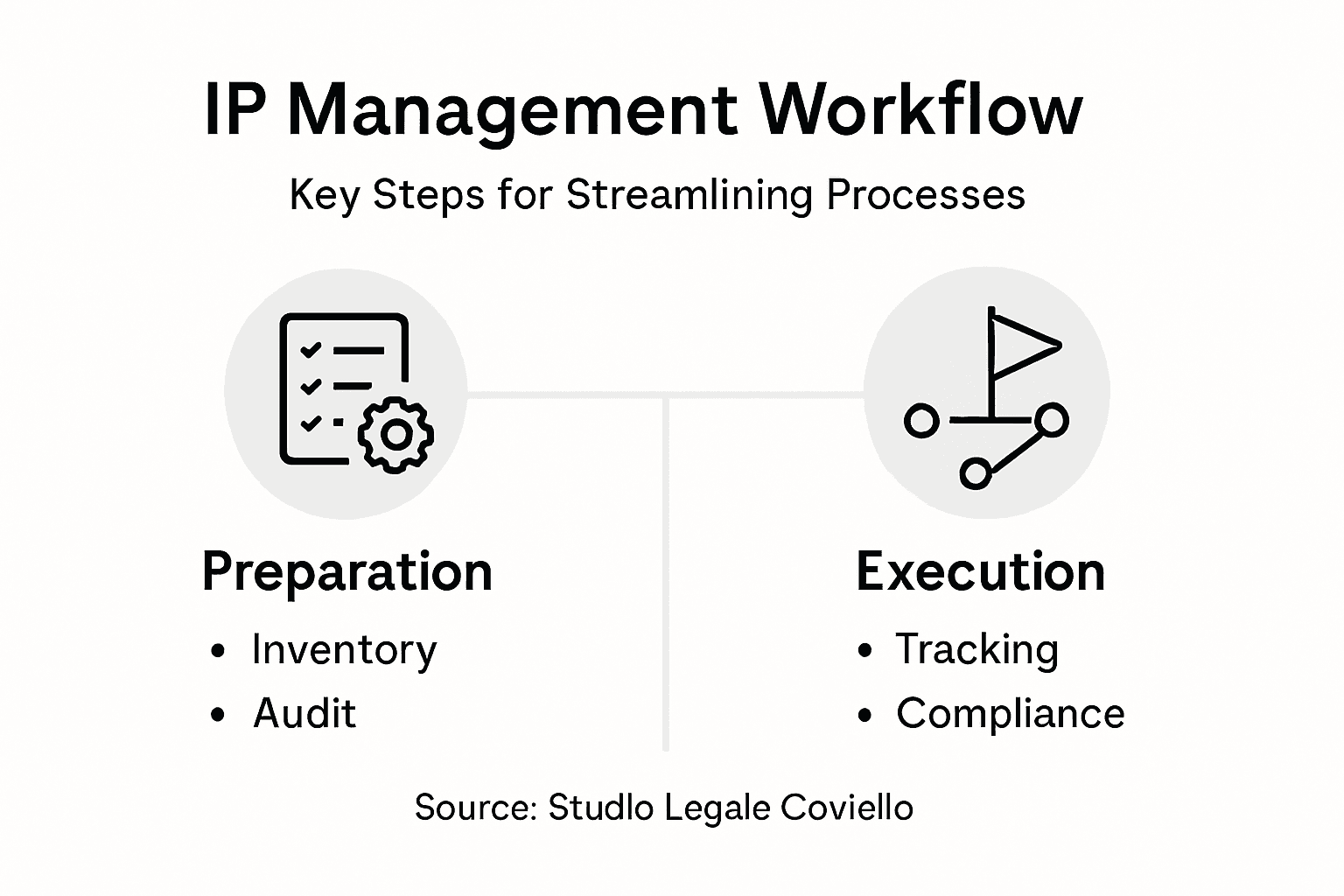
Pro tip: Create a centralized digital repository with automatic alerts for upcoming documentation renewals and compliance deadlines to prevent any accidental lapses.
Step 5: Optimize enforcement and monitoring processes
Establishing a robust intellectual property enforcement strategy requires implementing sophisticated monitoring techniques that proactively detect and address potential infringements. Your goal is to create a comprehensive system that provides real-time insights and immediate response capabilities.
Develop a multi-layered enforcement framework that incorporates advanced technological solutions. Key components of an effective monitoring process should include:
Automated infringement detection systems
Global trademark and patent surveillance
Cross-border legal collaboration mechanisms
Predictive analytics for potential IP risks
Rapid response intervention protocols
Comprehensive digital tracking tools
The European Union Intellectual Property Office highlights advanced IP enforcement strategies that leverage artificial intelligence and data analytics to enhance detection and prevention of intellectual property violations.
Effective IP enforcement is not about reacting to threats, but anticipating and preventing them before they can cause damage.
Implement an integrated monitoring system that combines technological tools with legal expertise. This approach allows for real-time tracking of potential infringements across multiple jurisdictions, providing your organization with a proactive defense mechanism for your intellectual property assets.
Pro tip: Develop a centralized dashboard that aggregates monitoring data and provides instant alerts for potential IP risks, enabling rapid and strategic response.
Compare how traditional vs. AI-driven IP enforcement methodologies impact operations:
Approach | Detection Speed | Scope Coverage | Predictive Capabilities |
Traditional | Manual, often slow | Limited, regional focus | Reactive, little forecasting |
AI-driven | Automated, real-time | Global, comprehensive reach | Proactive, forecasts risks |
Enhance Your Intellectual Property Management with Expert Support
Managing intellectual property can be overwhelming when dealing with organizing assets, legal compliance, and cutting-edge technology integration. If you are struggling to transform your IP portfolio into a strategic competitive advantage, it is crucial to have a partner who understands advanced legal technologies, secure digital tracking systems, and enforcement optimization. Take control of your intellectual property by leveraging expert legal and technical consulting tailored for companies and individuals aiming to protect and maximize value from trademarks, patents, designs, and copyrights.

Discover how Studio Legale Coviello combines deep expertise in international commercial and intellectual property law with innovative digital tools like AI-driven analytics and mobile management apps. Act now to safeguard your IP assets against infringement and compliance risks while benefiting from a strategy that aligns perfectly with your business goals. Visit our official website and explore our comprehensive intellectual property services designed to streamline and protect your IP portfolio with cutting-edge solutions.
Frequently Asked Questions
How can I create an intellectual property inventory?
Start by listing all your intellectual property assets in a centralized document. Include details such as patents, trademarks, copyrights, and trade secrets, ensuring that each entry is complete and organized for easy tracking.
What types of legal technologies should I consider for managing intellectual property?
Focus on platforms that offer automated patent and trademark tracking, AI-powered research, and real-time global rights monitoring. Evaluate these options to improve the efficiency and accuracy of your intellectual property management processes.
What security measures should I implement for digital tracking of my intellectual property?
Use advanced security protocols like encrypted data storage and biometric authentication. Establish multi-layered protection to secure your intellectual property portfolio from unauthorized access or breaches.
How do I ensure compliance for my intellectual property documentation?
Develop a systematic verification process for all documentation, including registration certificates and ownership records. Regularly review your compliance checklist to ensure it meets the legal standards required for your intellectual property rights.
What steps should I take to monitor potential infringements of my intellectual property?
Set up automated infringement detection systems that provide real-time surveillance of your intellectual property. Integrate these tools with legal expertise to create a proactive approach to identify and address potential violations immediately.
How often should I conduct an audit of my intellectual property portfolio?
Conduct a comprehensive audit at least once a year to reassess your inventory and identify any gaps in your intellectual property strategy. This practice ensures that your management process aligns with your current business objectives and helps you stay competitive.
Recommended

Comments