


Intellectual Property Registration Guide for Startups

Securing the unique innovations that power your startup is a challenge every founder faces. Intellectual property protection goes far beyond simple paperwork—it shapes your ability to compete globally and attract investment. By leveraging strategic intellectual property registration and harnessing digital tools, Italian and international tech founders can safeguard their innovations and position their business for sustainable growth. This guide offers practical strategies for identifying, documenting, and registering your most valuable assets efficiently and confidently.
Table of Contents
Quick Summary
Key Insight | Explanation |
1. Conduct a thorough IP assessment | Identify and categorize your startup’s intellectual assets for effective protection and strategic advantage. |
2. Choose the right registration method | Select appropriate registration methods based on the type of intellectual property to ensure optimal protection. |
3. Maintain meticulous documentation | Organize and prepare thorough documentation to support your intellectual property applications and safeguard your rights. |
4. File applications digitally | Utilize online platforms for streamlined filing, ensuring speed and efficiency in securing your intellectual property rights. |
5. Actively monitor your IP status | Regularly check registration status and renewal deadlines to maintain and protect your intellectual property effectively. |
Step 1: Assess Your Intellectual Property Assets
Successfully protecting your startup’s innovative assets begins with a comprehensive intellectual property assessment. This critical first step helps you identify, categorize, and strategically evaluate the unique intellectual resources that set your business apart from competitors.
To effectively assess your intellectual property assets, start by conducting a systematic inventory of your intangible resources. This includes identifying all potential intellectual property such as:
Technological innovations that could qualify for patent protection
Software code and algorithms with potential copyright eligibility
Brand names, logos, and design elements suitable for trademark registration
Trade secrets that provide competitive business advantages
Unique business methodologies or processes
The comprehensive valuation approach recommended by the International Chamber of Commerce emphasizes understanding each asset’s legal, functional, and economic characteristics. This means evaluating not just the current value of your intellectual property, but also its potential future commercial impact.
Pay special attention to documenting the origins, development timeline, and specific innovative aspects of each potential intellectual property asset. Maintain detailed records of invention dates, creative processes, and any collaborative contributions. This documentation will prove crucial during the registration and protection stages.
Pro tip: Conduct a thorough internal audit with your technical and creative teams to uncover potentially overlooked intellectual property assets that could provide significant strategic value to your startup.
Step 2: Select Appropriate Registration Methods
Navigating the complex landscape of intellectual property registration requires strategic decision-making to protect your startup’s most valuable innovations. Your goal is to choose the most suitable registration method that aligns with the specific type of intellectual property you want to safeguard.
The USPTO provides comprehensive guidance on different intellectual property protection categories, which can be broken down into three primary registration methods:
Trademark Registration: Protects brand names, logos, and design elements that distinguish your products or services
Patent Application: Secures exclusive rights for new inventions, technological innovations, and unique processes
Copyright Registration: Covers original creative works like software code, design assets, and written materials
Each registration method requires specific documentation and meets distinct legal criteria. For technological startups, this often means carefully evaluating which type of protection best suits your innovative assets. Patents typically provide the strongest protection for breakthrough technologies, while trademarks safeguard your brand’s unique identity.

Here’s a quick comparison of intellectual property registration types for startups:
Type of Protection | Main Purpose | Typical Coverage | Business Benefit |
Patent | Defend inventions | Technologies, processes | Excludes market competitors |
Trademark | Distinguish brand | Names, logos, unique designs | Builds brand trust |
Copyright | Protect creative works | Software, written content | Controls content use |
Selecting the right intellectual property registration method is not just a legal formality, but a strategic business decision that can significantly impact your startup’s long-term competitive advantage.
Consider consulting with an intellectual property specialist who can provide tailored advice about your specific innovations and help you navigate the nuanced registration processes for different asset types.
Pro tip: Prioritize early registration of your most critical intellectual property assets to establish legal precedence and prevent potential future disputes.
Step 3: Prepare and Organize Required Documentation
Documenting your intellectual property assets is a critical step that requires meticulous attention to detail and strategic organization. Your goal is to create a comprehensive and well-structured documentation package that clearly demonstrates the unique characteristics of your innovative assets.
The USPTO base application requirements outline several crucial elements you’ll need to compile for successful registration. Key documentation components include:
Applicant Identity: Detailed legal information about your startup
Filing Basis: Clear explanation of your intellectual property’s origin and purpose
Goods and Services Classification: Precise categorization of your innovative assets
Mark Drawing: Visual representation of trademarks or design elements
Specimen Samples: Tangible examples demonstrating the practical application of your intellectual property
Authorized Signatures: Official documentation proving your legal right to register
Harvard’s Office of Technology Development recommends maintaining a confidential invention disclosure that includes:
Comprehensive technical description
Potential commercial applications
Development timeline
Collaborative contributions
Comparative analysis with existing technologies
Thorough and precise documentation is your first line of defense in protecting your startup’s most valuable intellectual assets.
Organize your documentation in a digital format with secure backups, creating both a physical and digital archive that can be easily referenced during the registration process. Ensure all documents are clearly labeled, dated, and cross-referenced.
Pro tip: Create a dedicated digital folder with sub-folders for each type of intellectual property, using a consistent naming convention that allows for quick retrieval and comprehensive tracking.
Step 4: File Intellectual Property Applications Digitally
Filing your intellectual property applications electronically streamlines the entire registration process, offering startup founders a convenient and efficient pathway to protecting their innovative assets. Modern digital platforms have transformed how entrepreneurs secure their intellectual property rights.
The USPTO Patent Center provides a unified online interface that enables entrepreneurs to submit applications comprehensively and track their progress in real-time. Key steps for digital filing include:
Create an Official Account: Establish verified credentials on the digital platform
Prepare Digital Documentation: Scan and upload all required application materials
Complete Online Forms: Fill out precise digital application templates
Upload Supporting Evidence: Include technical descriptions, drawings, and specimen samples
Pay Registration Fees: Use secure online payment systems
Confirm Submission: Review and electronically sign your application
For copyright-specific applications, the digital process involves additional considerations. Each intellectual property category requires slightly different documentation and approach, so carefully review the specific requirements for your asset type.
Digital filing provides unprecedented speed and transparency in intellectual property registration, reducing processing times and simplifying communication with regulatory bodies.
Each digital submission requires meticulous attention to detail. Double-check all uploaded documents for clarity, completeness, and accuracy before final submission. Ensure your digital files meet the specified format requirements for optimal processing.
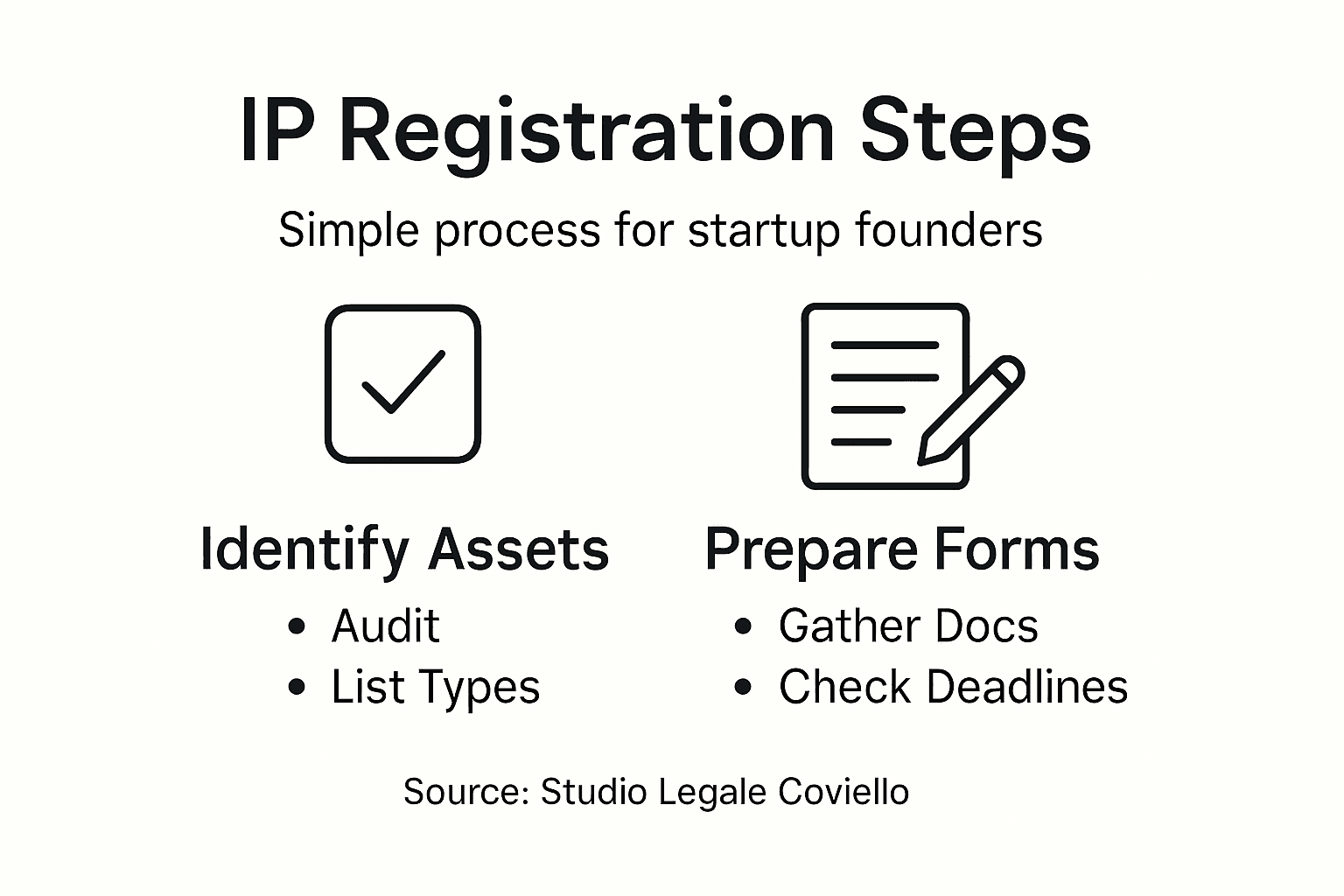
Pro tip: Maintain digital and physical backup copies of all submitted documentation to create a comprehensive record of your intellectual property registration journey.
Step 5: Verify Registration Status and Maintain Rights
Protecting your intellectual property is an ongoing process that requires consistent monitoring and proactive management. Understanding how to track and maintain your registration status is crucial for preserving the legal protections you’ve worked hard to establish.
The USPTO Trademark Status system provides entrepreneurs with critical tools to monitor their intellectual property rights effectively. Key strategies for maintaining your registration include:
Regular Status Checks: Monitor application and registration progress consistently
Track Renewal Deadlines: Mark important maintenance and renewal dates
Respond Promptly: Address any official communications or requests immediately
Maintain Documentation: Keep comprehensive records of all registration materials
Update Contact Information: Ensure current contact details are on file with the registration authority
Intellectual property rights require ongoing vigilance. Different types of intellectual property have varying maintenance requirements:
Trademarks: Require periodic renewal and proof of continued use
Patents: Need maintenance fees paid at specific intervals
Copyrights: Generally have longer protection periods but require documentation of original creation
Consistent monitoring of your intellectual property status is not just a bureaucratic task, but a critical strategy for protecting your startup’s most valuable innovative assets.
Establish a systematic approach to tracking your intellectual property rights. Create digital and physical reminder systems, set calendar alerts for critical deadlines, and consider consulting with an intellectual property specialist to ensure comprehensive protection.
This summary outlines key ongoing maintenance steps for intellectual property rights:
Maintenance Activity | Applies to | What It Prevents | Frequency |
Renewal filings | Trademarks, patents | Loss of protection | Periodic (set intervals) |
Status monitoring | All types | Missed deadlines | Monthly or quarterly |
Fee payments | Patents | Involuntary expiration | Scheduled dates |
Updating records | All types | Outdated contact info | As changes occur |
Pro tip: Set up automated reminders and create a dedicated folder system for tracking all intellectual property documentation and deadlines to prevent accidental rights expiration.
Secure and Maximize Your Startup’s Intellectual Property Value Today
Starting your journey with intellectual property can seem overwhelming when you face challenges like choosing the correct registration method or keeping track of complex documentation and deadlines. You want to protect your patents, trademarks, copyrights, and trade secrets effectively while maintaining ongoing rights without risking pitfalls or missed renewals. The guide stressed how critical detailed assessments, organized filings, and vigilant monitoring are to preserving your startup’s competitive edge.
At Studio Legale Coviello, we specialize in turning these intellectual property challenges into clear legal advantages. With advanced technology including AI-powered tools and a dedicated mobile app to help you manage your IP portfolio, our expert team delivers tailored legal and technical advice that ensures your innovations receive the strongest protection globally. Whether you are pursuing patents in food tech, gaming, or IoT monitoring or need strategic trademark and copyright guidance, our international experience offers peace of mind and faster, more efficient registration processes.

Don’t leave your startup’s future to chance. Visit our website to discover how our comprehensive intellectual property consulting services can help you protect your ideas from day one. Take control of your innovation journey now and transform your intellectual property into a powerful business asset today.
Frequently Asked Questions
How do I assess my startup’s intellectual property assets?
To assess your startup’s intellectual property assets, conduct a comprehensive inventory of your intangible resources. Identify technological innovations, software code, trademarks, trade secrets, and unique business processes to categorize and evaluate their potential value.
What are the key types of intellectual property registration available for startups?
The key types of intellectual property registration for startups include trademarks, patents, and copyrights. Each type serves a specific purpose: trademarks protect brand identity, patents secure inventions, and copyrights cover original creative works.
What documentation is required to file for intellectual property registration?
Key documentation for intellectual property registration includes the applicant’s identity, filing basis, goods and services classification, and specimen samples. Organize these materials clearly and ensure they accurately represent your innovative assets to support a successful application.
How can I file my intellectual property applications digitally?
To file your intellectual property applications digitally, create an official account on the relevant online platform. Prepare and upload all required documentation, complete the necessary online forms, and confirm your submission with the appropriate fees to streamline the process.
How do I verify the registration status of my intellectual property?
You can verify the registration status of your intellectual property by regularly checking your application’s progress through the appropriate monitoring system. Set reminders for renewal deadlines and stay proactive to ensure your legal protections remain intact.
What steps should I take to maintain my intellectual property rights?
To maintain your intellectual property rights, regularly track your registration status and adhere to renewal deadlines. Ensure you keep detailed records of all registration materials and promptly respond to any official communications to prevent loss of protection.
Recommended

Comments