


Legal Tech in IP: Transforming Startup Protection
- Feb 16
- 8 min read

Tech-driven startups in Italy and the UAE face escalating challenges as digital innovation pushes traditional intellectual property boundaries. Protecting creative assets in fast-moving sectors like food tech and gaming demands a clear understanding of legal tech fundamentals. By exploring AI-driven intellectual property mechanisms, blockchain-based authentication, and real-time digital asset tracking, founders can equip their businesses with robust solutions that safeguard innovation and support confident growth amid evolving legal and technological landscapes.
Table of Contents
Key Takeaways
Point | Details |
Technological Integration is Essential | Startups must blend traditional legal principles with innovative technologies to enhance intellectual property protection strategies. |
AI and Blockchain are Game Changers | Leveraging AI and blockchain can significantly streamline IP management processes and improve security and transparency. |
Continuous Training is Crucial | Investing in ongoing legal tech training can keep teams updated on emerging technologies that impact intellectual property. |
Proactive Compliance Strategies | Startups should develop flexible compliance frameworks to navigate complex legal landscapes and mitigate risks effectively. |
Legal Tech Fundamentals in Intellectual Property
Intellectual Property (IP) law represents a complex technological ecosystem where digital innovation continually challenges traditional legal frameworks. As startups increasingly drive technological advancement, understanding legal tech fundamentals becomes critical for protecting innovative assets.
The emergence of advanced technologies has fundamentally transformed IP protection strategies. AI-driven intellectual property mechanisms are revolutionizing how innovators safeguard their creative works, introducing sophisticated digital rights management systems that offer unprecedented protection levels.
Key technological approaches in legal tech for IP protection include:
Blockchain-based authentication for verifying original creation timestamps
Smart contract frameworks for automatic rights management
Digital signature technologies preventing unauthorized modifications
Automated plagiarism detection systems
Real-time intellectual asset tracking platforms
Understanding these technological interventions requires a multidisciplinary approach combining legal expertise with technological sophistication. Startups must develop comprehensive strategies that integrate traditional legal principles with cutting-edge digital tools.
Pro tip: Invest in continuous legal tech training to stay ahead of emerging intellectual property protection technologies.
Core Technologies Shaping IP Management
The digital transformation of intellectual property management has accelerated dramatically, with innovative technologies redefining how startups protect and leverage their creative assets. Digital platforms revolutionize IP registration by introducing sophisticated mechanisms that streamline protection processes and enhance innovation tracking.
Modern intellectual property management relies on a complex ecosystem of cutting-edge technologies that provide comprehensive protection strategies. Artificial Intelligence and machine learning have emerged as critical tools, enabling sophisticated rights management through advanced algorithmic approaches that can detect potential infringements, track usage patterns, and automate complex legal documentation.
Key technological components driving IP management innovation include:
Blockchain verification systems for establishing immutable ownership records
AI-powered trademark and patent search engines
Machine learning algorithms for risk assessment and infringement prediction
Cloud-based IP portfolio management platforms
Automated digital rights tracking and enforcement mechanisms
Advanced technologies are transforming intellectual property from a static legal concept into a dynamic, digitally-managed asset ecosystem.
Enterprise-level startups must strategically integrate these technologies to create robust intellectual property protection frameworks that adapt to rapidly evolving digital landscapes. This requires a holistic approach that combines legal expertise with technological innovation.
Pro tip: Regularly audit and update your technological IP management tools to ensure comprehensive protection and compliance with emerging digital standards.
The following table summarizes how key technologies impact intellectual property management for startups:
Technology | Primary Benefit | Typical Use Case |
Artificial Intelligence | Accelerates rights analysis | Automated infringement detection |
Blockchain | Ensures ownership transparency | Immutable record creation |
Machine Learning | Improves risk assessment | Predicting IP disputes |
Cloud Platforms | Simplifies portfolio access | Centralized IP documentation |
Smart Contracts | Automates rights enforcement | Automatic license execution |
AI, Blockchain, and Automation in IP Processes
The intersection of artificial intelligence, blockchain technology, and automation is fundamentally reshaping intellectual property management for innovative startups. Blockchain technology transforms IP protection by creating transparent, immutable systems that authenticate and track ownership with unprecedented precision and security.

Modern intellectual property processes now leverage sophisticated technological frameworks that automate complex legal and administrative tasks. Artificial intelligence algorithms can now conduct comprehensive patent searches, detect potential infringements, and predict legal risks with remarkable accuracy, dramatically reducing the time and resources traditionally required for IP management.
Key technological innovations driving IP process automation include:
Smart contract frameworks for automatic licensing and rights management
AI-powered trademark and patent search algorithms
Blockchain-based ownership verification systems
Automated digital rights tracking platforms
Machine learning infringement detection mechanisms
Technological convergence is transforming intellectual property from a static legal document into a dynamic, self-regulating digital asset.
Enterprise-level startups must strategically integrate these advanced technologies to create robust, adaptable intellectual property protection strategies. This requires a holistic approach that combines legal expertise with cutting-edge technological capabilities, ensuring comprehensive protection in an increasingly complex digital landscape.
Pro tip: Invest in continuous technology training and interdisciplinary collaboration to effectively leverage AI and blockchain innovations in your IP management strategy.
Regional Legal Frameworks and Cross-Border IP
Navigating intellectual property protection across international boundaries demands sophisticated understanding of complex legal landscapes. Cross-border IP disputes reveal significant global challenges that require innovative strategic approaches for startups expanding beyond their home markets.
The international intellectual property ecosystem is characterized by intricate variations in legal standards, enforcement mechanisms, and jurisdictional nuances. Different regions maintain unique regulatory frameworks that can significantly impact how intellectual assets are protected, licensed, and defended, creating a complex environment for innovative startups seeking global market expansion.
Key considerations for cross-border IP management include:
Understanding international treaty frameworks like TRIPS and WIPO conventions
Recognizing jurisdiction-specific registration requirements
Developing multi-regional IP protection strategies
Implementing adaptive legal compliance mechanisms
Conducting comprehensive regional risk assessments
International intellectual property protection requires strategic flexibility and deep understanding of diverse legal environments.
Startups must develop comprehensive approaches that balance technological innovation with nuanced legal intelligence. This involves creating adaptable IP strategies that can navigate the complex intersection of national and international legal frameworks while maintaining robust protection for intellectual assets.
Pro tip: Consult with international IP specialists who understand multi-jurisdictional legal complexities before expanding intellectual property protections across different global markets.
Here is a brief comparison of regional versus global IP strategies for innovative startups:
Strategy Type | Focus Area | Major Challenge | Key Advantage |
Regional | Localized compliance | Navigating diverse rules | Strong jurisdictional protection |
Global | Multi-jurisdictional protection | Complex enforcement coordination | Broad market access |
Risks, Compliance, and Cost Considerations
Managing intellectual property risks requires a sophisticated approach that balances technological innovation with financial pragmatism. Legal compliance costs continue rising dramatically for startups navigating complex regulatory environments across multiple jurisdictions.
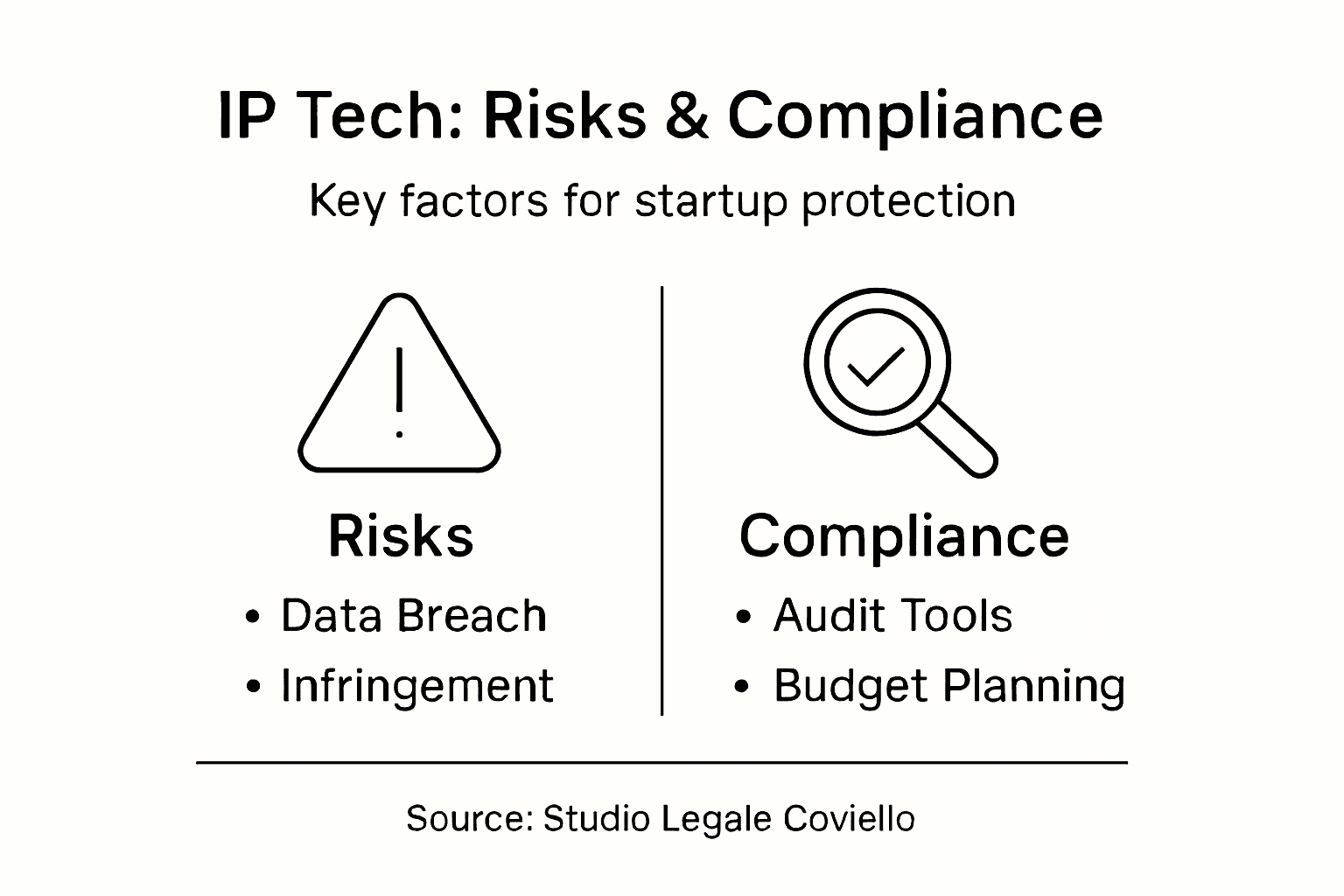
The intellectual property compliance landscape presents multifaceted challenges that demand strategic resource allocation and proactive risk management. Emerging technologies have created both opportunities and complex legal frameworks that require startups to develop nuanced, adaptive compliance strategies that can protect innovative assets while managing potential financial exposures.
Key risk mitigation strategies for startups include:
Conducting comprehensive legal risk assessments
Implementing robust digital rights management systems
Developing flexible compliance frameworks
Maintaining detailed documentation of intellectual assets
Creating scalable legal technology infrastructure
Budgeting for potential international legal challenges
Effective intellectual property risk management requires a holistic approach that integrates legal expertise, technological intelligence, and financial planning.
Startups must recognize that compliance is not a static process but a dynamic, ongoing commitment requiring continuous investment in legal technologies, training, and strategic adaptation. This means developing sophisticated mechanisms that can quickly respond to evolving regulatory landscapes and emerging technological challenges.
Pro tip: Allocate at least 10-15% of your intellectual property budget specifically for compliance technology and ongoing legal risk management.
Best Practices for Leveraging Legal Tech
Legal technology has transformed intellectual property management, demanding strategic approaches that balance technological innovation with legal expertise. AI integration requires careful implementation to ensure efficient and accurate intellectual property protection strategies.
The legal technology landscape presents complex challenges that require startups to develop sophisticated, adaptive technological frameworks. Modern IP management demands more than traditional legal approaches, necessitating comprehensive strategies that integrate cutting-edge digital tools with robust legal understanding and strategic foresight.
Key best practices for leveraging legal technology include:
Conducting regular technological capability assessments
Implementing AI-driven patent analytics platforms
Developing cross-jurisdictional compliance frameworks
Creating scalable digital rights management systems
Training legal teams on emerging technological tools
Maintaining strict data protection protocols
Aligning technological investments with business objectives
Effective legal technology adoption requires a balanced approach that combines technological innovation with human expertise and strategic thinking.
Startups must view legal technology not as a replacement for legal expertise, but as a powerful augmentation tool that enhances decision-making, reduces administrative overhead, and provides more comprehensive intellectual property protection mechanisms.
Pro tip: Invest in continuous technological training and create a dedicated innovation budget to systematically explore and integrate emerging legal tech solutions.
Elevate Your Startup’s IP Protection with Advanced Legal Tech Solutions
Startups face complex challenges when protecting intellectual property in an evolving digital landscape. The article highlights critical pain points like navigating AI-driven rights management, blockchain authentication, and cross-border compliance. These evolving technologies demand specialized legal and technical support that can seamlessly integrate innovation with strong protection strategies.
At Studio Legale Coviello, we specialize in empowering startups to safeguard and maximize their intellectual assets. Our expert team provides tailored legal counsel combined with cutting-edge technology solutions including AI-enhanced patent analytics and blockchain-based rights management. With a strong international focus and expertise in sectors like food tech and gaming, we help you confidently manage the complexities of global IP enforcement and compliance.
Are you ready to secure your innovative edge with a legal partner who understands the intersection of technology and intellectual property protection?

Explore how our specialized services can protect your trademarks, patents, and copyrights by visiting Studio Legale Coviello. Harness innovation and legal expertise today to turn your IP challenges into competitive advantages. Contact us now to start building your comprehensive IP strategy with proven legal tech solutions.
Frequently Asked Questions
What are the key technologies transforming intellectual property protection for startups?
Advanced technologies such as artificial intelligence, blockchain, and machine learning are significantly changing IP protection strategies. These tools enable automated rights management, infringement detection, and ownership verification, enhancing the overall protection of creative assets.
How can artificial intelligence improve IP management for startups?
Artificial intelligence can automate complex legal tasks, such as conducting patent searches, detecting infringements, and predicting legal risks. This efficiency reduces time and resource expenditures traditionally associated with IP management, allowing startups to focus on innovation.
What are some effective risk mitigation strategies for intellectual property compliance?
Startups can mitigate IP risks by conducting comprehensive legal risk assessments, implementing robust digital rights management systems, and maintaining detailed documentation of intellectual assets. Additionally, developing flexible compliance frameworks is crucial for adapting to evolving regulations.
Why is it essential for startups to invest in legal tech training?
Continuous legal tech training equips startups with the knowledge to effectively leverage modern technologies in IP management. This investment helps ensure that legal and compliance teams are well-prepared to navigate the complexities of digital landscapes and utilize emerging tools for better protection.
Recommended

Comments