


Protecting Intellectual Assets Workflow for Tech Firms

Protecting your tech startup’s unique ideas can quickly become complex when operating across Italy and the UAE. As AI-driven solutions reshape everything from recordkeeping to enforcement, tracking the legal status of patents, trademarks, and other intellectual assets is now more crucial than ever. By focusing on a systematic approach to asset assessment, automated registration tools, and intelligent monitoring, you can secure your company’s innovation and stay ready for new global challenges.
Table of Contents
Quick Summary
Key Insight | Explanation |
1. Systematically Assess Intellectual Assets | Create a detailed inventory of all intellectual property, including patents, trademarks, copyrights, and trade secrets, to establish your current standing. |
2. Implement Automated Registration Tools | Utilize advanced automated platforms to streamline the registration process and maintain accurate records of intellectual property protections. |
3. Deploy AI for Infringement Monitoring | Leverage AI technologies to actively scan for unauthorized use of intellectual assets, enhancing your proactive enforcement efforts. |
4. Develop Incident Response Protocols | Establish clear response guidelines to quickly address intellectual property violations and enhance your protection strategies. |
5. Regularly Verify Asset Protection | Conduct regular reviews and updates of your intellectual property portfolio to ensure ongoing compliance and protection across jurisdictions. |
Step 1: Assess Current Intellectual Asset Portfolio
Successfully protecting your tech firm’s intellectual assets begins with a comprehensive assessment of your existing portfolio. This crucial first step involves systematically documenting and evaluating all intellectual property your organization currently owns or has developed.
To effectively assess your intellectual asset portfolio, start by conducting a thorough inventory of your existing assets. The U.S. Department of Commerce recommends firms comprehensively track intellectual property assets across multiple categories:
Patents: Technical inventions and innovations
Trademarks: Brand identifiers and logos
Copyrights: Original creative works and software
Trade secrets: Confidential business processes and methodologies
Organize these assets by creating a detailed spreadsheet that includes critical information for each item:
Here’s a summary of how each type of intellectual property asset supports tech firm goals:
IP Asset Type | Main Business Benefit | Typical Risk if Unprotected |
Patents | Exclusive rights to innovations | Loss of competitive advantage |
Trademarks | Brand recognition and trust | Brand dilution |
Copyrights | Control over creative output | Content misuse |
Trade Secrets | Sustained market differentiation | Unauthorized disclosure |
Asset type and classification
Registration or filing date
Jurisdictional coverage
Current legal status
Potential market value
Expiration or renewal dates
A systematic portfolio assessment reveals not just your current intellectual assets, but also identifies potential gaps in protection strategies.
Utilize data from resources like the U.S. Bureau of Economic Analysis to benchmark your intellectual property investments against industry standards. This comparative analysis helps you understand how your portfolio contributes to overall innovation and competitive positioning.

Pro tip: Conduct a portfolio review annually to ensure your intellectual assets remain aligned with your company’s evolving technological and business strategies.
Step 2: Implement Automated Rights Registration Tools
Streamlining your intellectual property protection requires implementing sophisticated automated rights registration tools that can efficiently manage and secure your tech firm’s innovative assets. These advanced systems transform the traditionally complex registration process into a seamless, technology-driven workflow.
Tech firms can leverage automated registration platforms that provide secure, time-stamped records for various intellectual property types. The key components of an effective automated rights registration strategy include:
Digital documentation: Centralized digital repositories for all intellectual assets
Automatic tracking: Real-time monitoring of registration status and deadlines
Cross-jurisdictional support: Tools compatible with multiple legal frameworks
Timestamp verification: Immutable records establishing ownership and originality
Implement these tools by following a systematic approach:
Research compatible automated registration platforms
Integrate with existing document management systems
Train team members on platform usage
Establish consistent documentation protocols
Configure automated notification systems
Automated rights registration tools reduce administrative overhead and minimize the risk of missed filing deadlines or incomplete documentation.
The OECD AI Principles underscore the importance of transparent, accountable systems that streamline intellectual property management. By adopting these technologies, your organization can significantly reduce human error and accelerate administrative workflows.
Pro tip: Select automated registration tools that offer robust API integration and comprehensive reporting features to maximize your intellectual property management efficiency.
Step 3: Apply AI Solutions to Monitor Infringement
Protecting your tech firm’s intellectual property requires implementing cutting-edge AI-driven monitoring solutions that can detect and respond to potential infringements across global digital landscapes. These advanced technologies enable proactive defense of your innovative assets with unprecedented speed and accuracy.
Tech companies can leverage AI technologies for intellectual property surveillance that analyze massive datasets to identify unauthorized use of copyrighted materials. The key capabilities of AI-powered infringement monitoring include:
Comprehensive scanning: Global digital platform monitoring
Pattern recognition: Detecting subtle unauthorized reproductions
Real-time alerts: Immediate notification of potential violations
Cross-platform tracking: Monitoring multiple digital environments simultaneously
Implement these AI monitoring solutions through a strategic approach:
Select AI-powered intellectual property monitoring platforms
Configure custom detection parameters
Establish escalation protocols for identified infringements
Integrate with legal response mechanisms
Continuously refine monitoring algorithms
AI-driven infringement monitoring transforms reactive legal defense into a proactive, intelligent protection strategy.
The U.S. Copyright Office recognizes the critical role of AI in modern intellectual property enforcement, highlighting its potential to reduce unauthorized content reproduction globally. By adopting these sophisticated monitoring technologies, your organization can create a robust defense system for your most valuable innovative assets.
This table compares automated rights registration tools and AI infringement monitoring solutions for tech firms:
Solution Type | Core Function | Key Business Value |
Automated Registration Tools | Streamline asset filings | Reduce manual workload |
AI Infringement Monitoring | Detect unauthorized use | Proactive legal response |
Pro tip: Regularly update your AI monitoring tools to ensure they can detect emerging patterns of digital infringement across evolving technological landscapes.
Step 4: Develop Incident Response and Enforcement Protocols
Establishing a robust incident response framework is critical for protecting your tech firm’s intellectual property rights when potential infringements occur. These protocols create a systematic approach to addressing and mitigating intellectual property violations swiftly and effectively.
Tech firms can utilize comprehensive enforcement guidelines that outline precise steps for responding to potential intellectual property threats. The critical components of an effective incident response protocol include:
Immediate documentation: Capturing detailed evidence of potential infringement
Legal assessment: Rapid evaluation of violation severity and impact
Escalation pathways: Clear communication channels for legal teams
Enforcement strategies: Predefined actions for different violation scenarios
Develop your incident response protocols through these strategic steps:
Create a dedicated intellectual property response team
Draft comprehensive violation assessment criteria
Establish clear communication and reporting mechanisms
Define legal intervention thresholds
Develop standardized documentation templates
An effective incident response protocol transforms potential vulnerabilities into opportunities for strengthening intellectual property protection.
Your enforcement strategy should include multiple intervention levels, from cease-and-desist communications to potential litigation, ensuring a measured and strategic approach to protecting your innovative assets.
Pro tip: Conduct periodic simulation exercises to test and refine your incident response protocols, ensuring your team remains prepared for potential intellectual property challenges.
Step 5: Verify Protection and Update Asset Registers
Safeguarding your tech firm’s intellectual property requires consistent verification and meticulous maintenance of your asset registers. This critical process ensures that all your innovative assets remain legally protected and strategically tracked across global jurisdictions.
Utilize comprehensive global IP verification resources to systematically review and update your intellectual property portfolio. The key elements of an effective verification process include:
Registration status: Confirm active protection for each asset
Jurisdictional coverage: Validate international registration boundaries
Renewal tracking: Monitor upcoming maintenance deadlines
Compliance verification: Ensure ongoing legal requirements are met
Implement a robust verification strategy through these structured steps:
Conduct quarterly comprehensive asset reviews
Cross-reference internal records with official databases
Validate registration dates and protection scopes
Identify assets requiring renewal or additional protection
Update centralized intellectual property management system
Consistent verification transforms your intellectual asset register from a static document into a dynamic strategic resource.
The United States Patent and Trademark Office provides essential tools for tech firms to maintain accurate and current intellectual property documentation, enabling proactive management of your innovative assets.
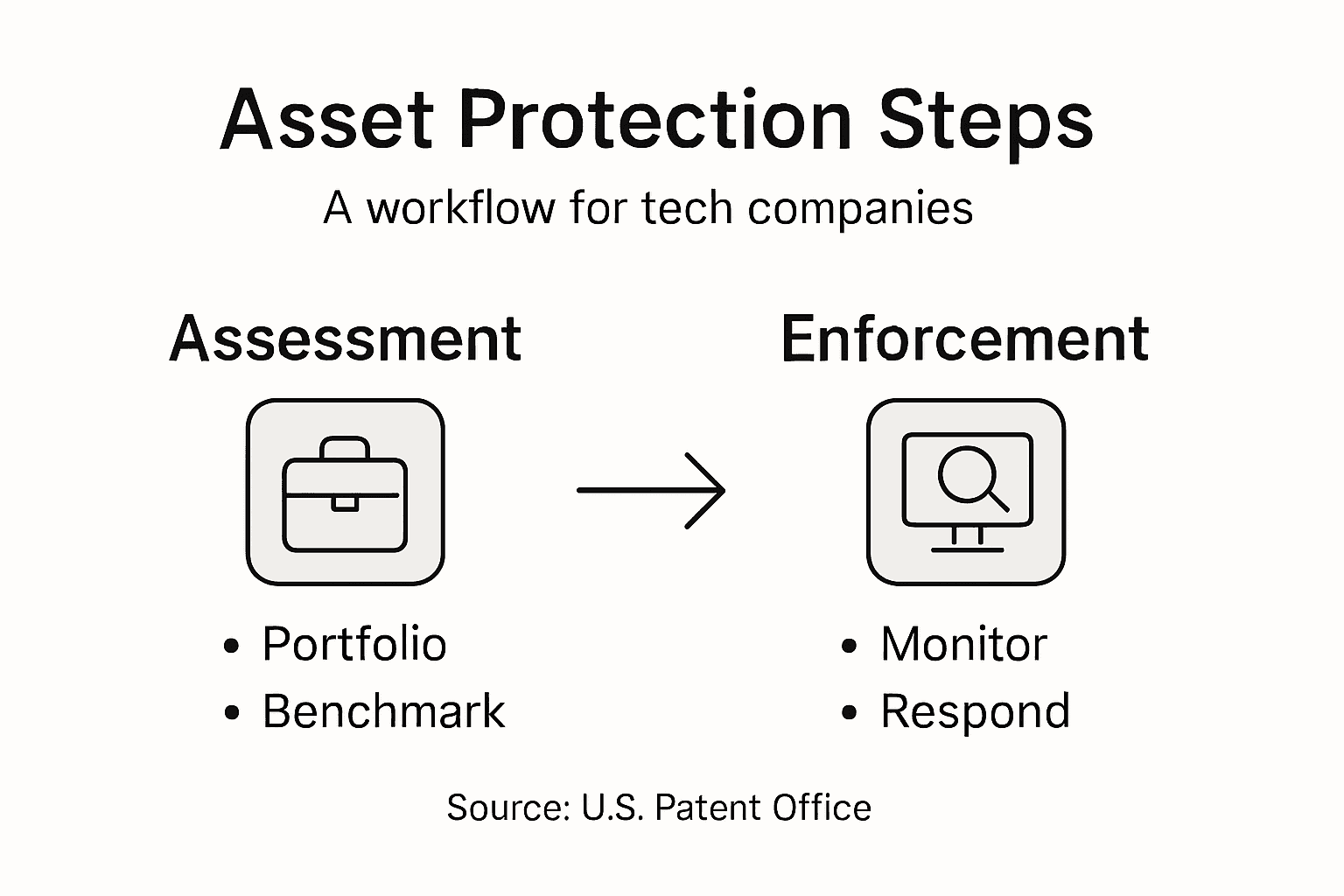
Pro tip: Designate a dedicated team member to oversee quarterly asset register updates, ensuring no critical registration or renewal deadlines are overlooked.
Secure Your Tech Firm’s Intellectual Assets with Expert Legal Guidance
Protecting your company’s intellectual property is complex and demands precise strategies covering portfolio assessment, automated registration, AI-powered monitoring, and swift enforcement protocols. The challenges of managing patents, trademarks, copyrights, and trade secrets increase every day as technology evolves rapidly. If your tech firm wants to avoid costly infringement issues and maintain its competitive edge, expert legal and technical support is essential.

Discover comprehensive solutions at Studio Legale Coviello that combine deep expertise in intellectual property law with cutting-edge technology, including AI-enhanced management tools and international enforcement strategies. Visit our site to learn how we help tech innovators streamline rights registration, monitor digital threats, and build resilient protection workflows. Act now to safeguard your innovations from unauthorized use and keep your valuable assets fully protected.
Frequently Asked Questions
What is the first step in protecting intellectual assets for tech firms?
To protect your intellectual assets, start by assessing your current intellectual asset portfolio. Conduct a thorough inventory of all patents, trademarks, copyrights, and trade secrets your organization owns or has developed, and document their details in a centralized spreadsheet.
How can automated rights registration tools benefit a tech firm’s intellectual property management?
Automated rights registration tools streamline the process of managing and securing intellectual assets by providing secure, time-stamped records and real-time tracking. Implement these tools to reduce manual workload and ensure timely filings within established deadlines.
What role does AI play in monitoring intellectual property infringement?
AI technologies enhance the monitoring of intellectual property infringements by analyzing vast datasets to detect unauthorized use with speed and accuracy. Leverage AI-driven solutions that provide real-time alerts to ensure proactive defense of your intellectual assets.
How should a tech firm develop incident response protocols for intellectual property threats?
Establish a robust incident response framework by documenting detailed steps for addressing potential infringements quickly. Create a dedicated intellectual property response team and outline communication channels to ensure effective coordination during incidents.
How often should a tech firm verify its intellectual asset protection status?
Tech firms should conduct quarterly reviews of their intellectual asset registers to verify registration status and ensure ongoing protection. Perform a comprehensive assessment to identify any assets needing renewal or additional attention, maintaining a dynamic and accurate portfolio.
What should be included in an asset portfolio spreadsheet for intellectual property?
An asset portfolio spreadsheet should include critical information such as asset type, registration date, legal status, potential market value, and renewal dates. Organize this data systematically to facilitate ongoing management and strategic decision-making.
Recommended

Comments