


Why Register Industrial Designs for Global Protection

More than 90 percent of successful American design-driven businesses treat intellectual property protection as a top priority. For Italian and international tech startups, securing unique industrial designs can mean the difference between sustainable growth and costly setbacks in the global market. This guide clears up common misconceptions, highlights key competitive advantages of registering designs, and lays out practical steps to protect innovations amid complex legal challenges worldwide.
Table of Contents
Key Takeaways
Point | Details |
Industrial Design is Multifaceted | It encompasses functional innovation, user experience, and market strategy, not just aesthetics. |
Legal Protection is Essential | Non-registration exposes designs to replication risks and potential market erosion. |
International Treaties Simplify Protection | The Hague Agreement and WIPO standards facilitate streamlined design registration globally. |
Documenting Design Development is Crucial | Comprehensive documentation strengthens legal claims and supports registration efforts. |
Defining Industrial Designs and Common Misconceptions
Industrial design represents a sophisticated strategic problem-solving discipline that transcends traditional product development. At its core, industrial design is about creating innovative solutions that bridge technology, user experience, and business success. Strategic problem-solving approach enables designers to develop products that are not just aesthetically pleasing, but functionally superior and economically viable.
Contrary to common misconceptions, industrial design is not merely about making products look attractive. It is a complex, multidisciplinary process that requires deep understanding of user needs, technological constraints, and market dynamics. Industrial designers employ a holistic approach that considers economic, social, and environmental impacts while developing solutions. They do not just sketch beautiful objects; they engineer experiences that solve real-world problems through empathy, creativity, and technical expertise.
The global significance of industrial design extends far beyond aesthetic considerations. Design capabilities represent a critical form of knowledge-based capital that helps companies compete internationally. Businesses that invest in robust industrial design strategies can differentiate themselves, protect their intellectual property, and create products that resonate deeply with target markets. By understanding user needs and applying pragmatic problem-solving methods, industrial designers transform abstract concepts into tangible, market-ready innovations.
Pro tip: When developing a new product design, always prioritize user experience and functional innovation over pure aesthetic appeal.
Here’s a comparison of common misconceptions versus the reality of industrial design:
Aspect | Misconceptions | Reality |
Main Focus | Looks and aesthetics | Functional innovation and problem-solving |
Required Skills | Artistic ability only | Technical, business, and creative expertise |
Impact Assessment | Visual appeal | Economic, social, and environmental effects |
Business Value | Minor competitive advantage | Strategic market differentiation |
Legal Protection and International Treaties
Industrial design protection represents a complex global legal landscape that requires strategic navigation through international treaties and regulatory frameworks. The Hague Agreement provides critical international design protection mechanisms, allowing designers and companies to secure intellectual property rights across multiple jurisdictions with a single application. This streamlined approach dramatically reduces administrative complexity and financial burden for businesses seeking comprehensive global design protection.
Several key international treaties form the backbone of industrial design legal frameworks. The World Intellectual Property Organization (WIPO) plays a pivotal role in harmonizing design protection standards worldwide. International treaties create standardized procedures for registering and enforcing design rights, enabling businesses to protect their innovative products across different national legal systems. These agreements address critical aspects such as registration processes, duration of protection, and enforcement mechanisms that help companies safeguard their design investments.
The global intellectual property landscape continues to evolve, with ongoing efforts to harmonize design protection mechanisms among member states. Emerging technologies and digital innovation are pushing legal frameworks to adapt rapidly, creating more sophisticated and responsive protection strategies. Businesses must stay informed about these evolving treaties and understand how they can leverage international legal instruments to defend their design innovations effectively. The complexity of these treaties underscores the importance of professional legal guidance in navigating international design protection.
Pro tip: Consult with an intellectual property specialist who understands international design protection treaties before filing any global design registrations.
This table summarizes how key international treaties benefit design protection:
Treaty/Organization | Main Benefit | Coverage Scope | Business Impact |
Hague Agreement | Simplifies global registration | Multiple countries at once | Reduces legal complexity |
WIPO Standards | Harmonizes design procedures | International consistency | Stronger global protection |
Regional Agreements | Local design enforcement | Specific regions | Tailored legal safeguards |
Exclusive Rights and Competitive Advantage
Industrial design registration provides companies with powerful strategic tools to establish and maintain market differentiation. Competitive advantages through design protection enable businesses to create unique value propositions that prevent direct imitation and safeguard their innovative approaches. By securing exclusive rights, organizations can transform their design investments into defensible intellectual property assets that generate long-term economic value.
The strategic implications of design exclusivity extend far beyond mere aesthetic protection. Exclusive rights create significant barriers to entry for competitors, allowing companies to maintain distinctive product identities and control market positioning. These legal protections empower businesses to capitalize on their creative investments by preventing unauthorized reproduction or adaptation of their design innovations. Such mechanisms not only protect financial investments but also incentivize continuous innovation by ensuring that original design concepts remain economically viable and legally defensible.
Global markets increasingly recognize industrial design as a critical form of intellectual property that drives competitive differentiation. Businesses that strategically leverage design registration can establish unique brand identities, communicate product value more effectively, and create sustainable competitive advantages. By preventing unauthorized copying and establishing clear ownership boundaries, companies can invest confidently in design research and development, knowing their innovative solutions are legally protected across multiple jurisdictions. This protection transforms design from a mere aesthetic consideration into a strategic business asset with measurable economic impact.
Pro tip: Document every stage of your design development process to strengthen potential legal claims and enhance the comprehensiveness of your design registration.
Registration Process and Key Requirements
International design registration demands meticulous attention to detail and comprehensive documentation. The process involves preparing precise visual representations of the design, ensuring compliance with international standards, and navigating complex legal requirements. Applicants must provide clear, high-quality drawings or photographs that accurately capture the unique features of their industrial design, highlighting the distinctive elements that distinguish their innovation from existing products.
The registration journey encompasses several critical stages that require strategic preparation. Key documentation typically includes a formal application, detailed design representations, product classification information, and proof of design ownership. Applicants must carefully identify the specific jurisdictions where design protection is desired, understanding that different countries may have varying requirements for design registration. Professional guidance becomes crucial in managing the intricate details of multi-national applications, ensuring comprehensive protection across diverse legal frameworks.
The international design registration guidelines outline specific procedural requirements that businesses must navigate carefully. These include precise technical specifications, clear identification of the design’s intended application, and compliance with formal filing protocols. Digital platforms like eHague have streamlined the registration process, allowing applicants to manage their design protections more efficiently. However, the complexity of international intellectual property law demands thorough preparation and potentially expert legal consultation to ensure successful registration.

Pro tip: Invest in professional photography or technical illustrations that precisely capture your design’s unique characteristics before initiating the registration process.
Risks of Non-Registration and Missed Opportunities
Non-registration of industrial designs exposes businesses to substantial strategic and financial vulnerabilities. Without formal legal protection, companies leave their innovative design investments completely unguarded, creating an open opportunity for competitors to replicate, adapt, or directly copy their unique product aesthetics. This vulnerability can rapidly erode competitive advantages, diminish brand distinctiveness, and potentially destroy years of design research and development investments.
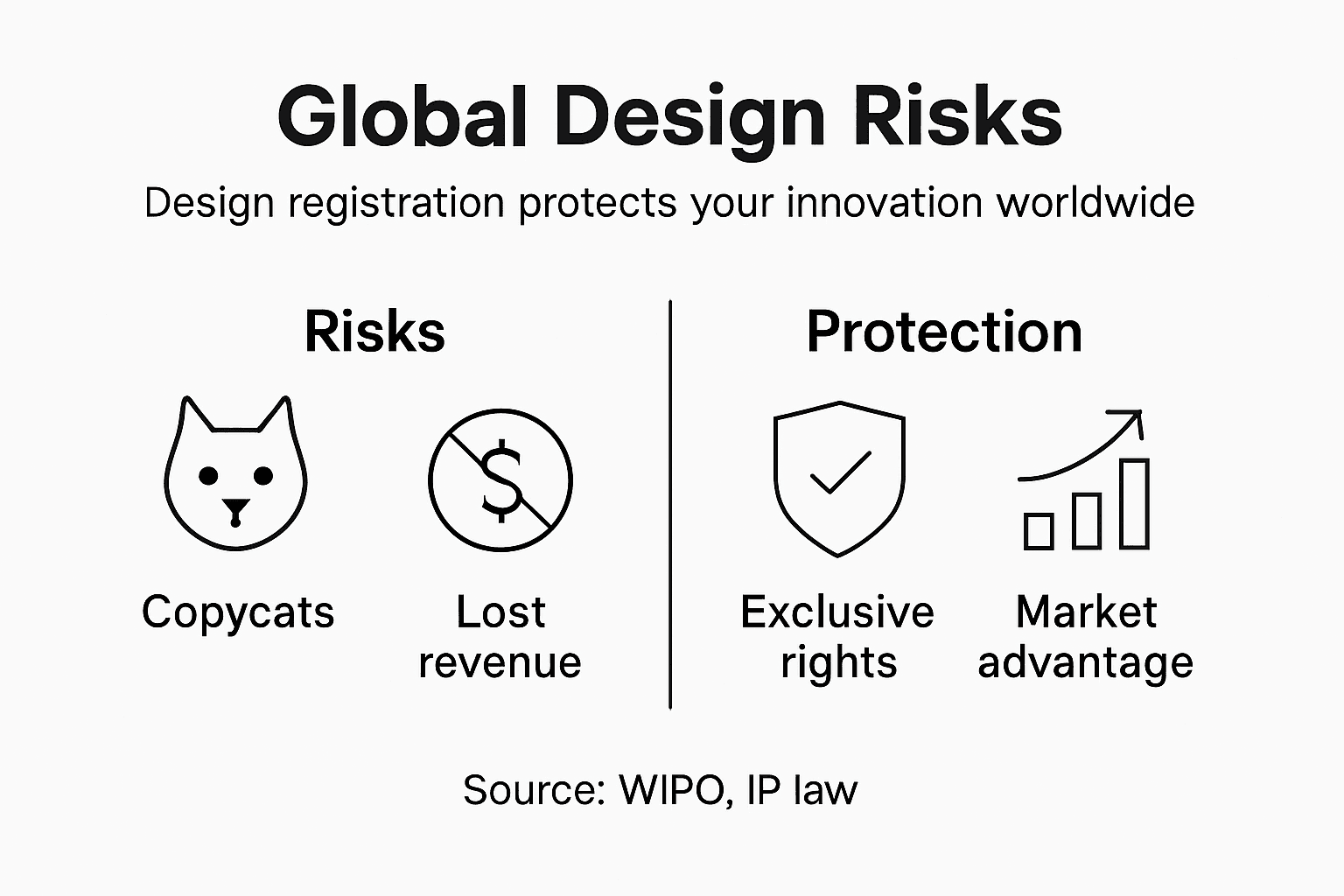
Market exclusivity becomes critically compromised when design registrations are neglected. Businesses that fail to secure their intellectual property rights may find themselves unable to prevent unauthorized reproductions, leading to significant market share erosion and potential revenue losses. The absence of legal documentation means companies cannot effectively challenge design infringements, leaving their innovative concepts exposed to widespread unauthorized exploitation. Strategic design protection acts as a critical barrier against competitive encroachment, transforming design from a mere aesthetic element into a defensible business asset.
Proactively searching existing design registrations becomes essential in mitigating potential legal and commercial risks. Businesses must understand that non-registration not only leaves their designs vulnerable but can also potentially expose them to inadvertent infringement of existing registered designs. This complex landscape requires meticulous research, strategic planning, and a comprehensive understanding of international intellectual property frameworks. Neglecting these critical steps can result in costly legal disputes, forced design modifications, and significant financial repercussions that far outweigh the initial investment in proper design registration.
Pro tip: Conduct a comprehensive design landscape analysis before launching any new product to identify potential registration conflicts and protect your innovative concepts.
Protect Your Industrial Designs Globally With Expert Legal Support
Registering your industrial designs is vital to secure exclusive rights that protect your innovation and maintain a strong competitive advantage worldwide. The challenges of navigating complex international treaties, like the Hague Agreement, and managing detailed registration requirements can overwhelm businesses. Without proper legal guidance there is a real risk of costly infringements, missed protections, and loss of market exclusivity.
At Studio Legale Coviello we specialize in intellectual property law with a focus on industrial design protection. Leveraging advanced technology and deep expertise we help companies and individuals transform their design investments into globally recognized assets. Our tailored legal counsel covers strategic registration, compliance with international frameworks, and enforcement to help you confidently safeguard your unique product innovations.
Explore our comprehensive legal services designed for effective global design registration.
Take control of your industrial design rights now and prevent unauthorized copying that can erode brand value and revenue. Contact us today at Studio Legale Coviello to start building your international design protection strategy with expert, technology-driven support.
Frequently Asked Questions
What is the purpose of registering industrial designs?
Registering industrial designs helps protect unique product aesthetics and functional innovations from unauthorized copying or imitation, establishing legal ownership and reducing vulnerability to market competition.
How does international design registration simplify the protection process?
International design registration, such as through the Hague Agreement, allows businesses to secure design rights across multiple jurisdictions with a single application, minimizing administrative complexity and costs.
What are the risks of not registering industrial designs?
Not registering industrial designs exposes businesses to the risk of competitors copying their products, resulting in loss of market exclusivity, diminished brand identity, and potential revenue losses due to unauthorized reproductions.
What documentation is required for international design registration?
Key documentation typically includes a formal application, detailed design representations (such as drawings or photographs), classification information, and proof of design ownership to ensure compliance with registration requirements.
Recommended

Comments