


What Is Industrial Property and Why It Matters
- Feb 14
- 7 min read

Protecting breakthrough ideas is often the difference between success and missed opportunity for innovators in industries like food tech and gaming. Legal rights for inventions, brand identities, and product designs are more than paperwork—they become a vital shield in markets driven by rapid change and global competition. Understanding the core principles of industrial property helps tech entrepreneurs secure their most valuable intellectual assets and lay the groundwork for lasting competitive advantage.
Table of Contents
Key Takeaways
Point | Details |
Understanding Industrial Property | Industrial property protects innovations, including patents, trademarks, and designs, incentivizing businesses to invest in research and development. |
Types of Rights | Various rights exist, such as patents for inventions and trademarks for branding, each serving unique strategic purposes. |
Global Treaties | International agreements like the Paris Convention and TRIPs Agreement standardize protections, facilitating global market access for innovators. |
Management Challenges | Entrepreneurs face risks such as high costs and complex regulations, requiring careful planning to optimize investment in intellectual property. |
Defining Industrial Property and Key Concepts
Industrial property represents a critical legal domain within intellectual property that protects commercial innovations and business assets. Industrial property rights encompass a range of commercial creations designed to encourage technological advancement and fair market competition.
At its core, industrial property covers several key categories of business innovations:
Patents protecting novel technological inventions
Trademarks identifying unique business brands and logos
Industrial designs safeguarding aesthetic product characteristics
Geographical indications marking products with specific regional origins
These legal protections serve multiple strategic purposes for entrepreneurs and businesses. They provide exclusive rights that prevent unauthorized commercial use of innovative designs, technological solutions, and brand identifiers. By granting temporary monopoly rights, industrial property frameworks incentivize companies to invest significant resources in research and development.
The scope of industrial property extends beyond mere legal registration. It represents a sophisticated mechanism for fostering innovation, protecting commercial investments, and maintaining competitive advantages in rapidly evolving technological landscapes. Entrepreneurs in sectors like food technology, gaming, and advanced manufacturing rely on these legal instruments to defend their intellectual investments.
Pro tip: Always conduct comprehensive preliminary searches before filing industrial property registration to minimize potential conflicts and optimize your protection strategy.
Types of Industrial Property Rights Explained
Industrial property rights form a complex legal landscape that protects various forms of commercial and creative innovations. Industrial property encompasses several distinct categories designed to safeguard different aspects of business intellectual assets and technological achievements.
The primary types of industrial property rights include:
Patents: Protecting novel technological inventions and processes
Trademarks: Securing unique brand identifiers and logos
Industrial designs: Protecting distinctive aesthetic product characteristics
Service marks: Distinguishing specific service-based business offerings
Commercial names: Preserving business entity naming rights
Geographical indications: Marking products with specific regional origins
Layout-designs of integrated circuits: Protecting semiconductor and microchip design innovations
Each category of industrial property right serves a unique strategic purpose in the innovation ecosystem. Patents, for instance, provide inventors exclusive rights to their technological solutions, typically lasting 20 years from the filing date. Trademarks offer businesses long-term protection for their brand identities, allowing companies to build recognizable market presence and prevent unauthorized brand usage.
Industrial design rights represent a particularly nuanced form of protection, focusing on the visual aesthetics of products. These rights enable designers and manufacturers to prevent competitors from copying the distinctive visual features that make their products unique in the marketplace. For technology entrepreneurs in sectors like gaming, food tech, and advanced manufacturing, understanding these nuanced protection mechanisms is crucial for maintaining competitive advantages.

Here’s a comparison of industrial property rights and their business importance:
Right Type | Main Focus | Typical Duration | Business Impact |
Patent | Technological inventions | 20 years | Enables exclusive commercialization |
Trademark | Brand identity & logos | Indefinite (renewable) | Builds and protects reputation |
Industrial Design | Product appearance | 15-25 years | Differentiates products visually |
Geographical Indication | Regional product origin | Indefinite (per use) | Adds unique market value |
Service Mark | Service business branding | Indefinite (renewable) | Secures service market distinction |
Layout-Design (IC) | Semiconductor design | 10 years | Shields advanced microchip design |
Commercial Name | Business entity name | Length of use | Safeguards business identity |
Pro tip: Consult with specialized intellectual property attorneys to develop a comprehensive protection strategy that covers multiple industrial property right categories for your specific innovations.
Legal Protections and International Treaties
The global landscape of industrial property rights is governed by a complex network of international agreements that establish standardized protections for innovators worldwide. Key international treaties shape the legal framework for protecting intellectual and industrial property across different jurisdictions.
Critical international agreements that form the backbone of industrial property protection include:
Paris Convention: The foundational treaty establishing basic intellectual property rights protections
Patent Cooperation Treaty: Streamlining international patent application processes
Madrid Agreement: Facilitating international trademark registrations
TRIPs Agreement: Establishing minimum standards for intellectual property protection under World Trade Organization guidelines
These treaties serve multiple strategic purposes for international businesses and innovators. They create a standardized approach to protecting intellectual assets, reducing barriers for entrepreneurs seeking global market access. The Paris Convention, for instance, introduced the concept of priority rights, allowing inventors to file initial patent applications in their home country and maintain those rights when seeking protection in other nations within a specified timeframe.
The World Trade Organization’s TRIPs Agreement represents a particularly significant milestone in international industrial property protection. By establishing minimum protection standards across member countries, it ensures a more consistent global approach to safeguarding technological innovations, brand identities, and creative intellectual assets. For technology entrepreneurs in sectors like food tech, gaming, and advanced manufacturing, understanding these international frameworks is crucial for developing comprehensive global protection strategies.
Below is a summary of key international treaties and their effects:
Treaty/Agreement | Main Purpose | Effect on Innovators |
Paris Convention | Baseline IP protection | Simplifies multi-country filings |
PCT | Single patent application process | Streamlines global patent coverage |
Madrid Agreement | International trademark registration | Protects brands across many nations |
TRIPs Agreement | Minimum IP protection standards | Levels playing field globally |
Pro tip: Consult with international intellectual property experts to navigate the complex landscape of global industrial property rights and develop a robust, multi-jurisdictional protection strategy.
Strategic Benefits for Tech Innovators
Industrial property rights offer technology entrepreneurs a powerful strategic toolkit for protecting and monetizing their innovative assets. Intellectual property protection enables startups and tech companies to transform their creative ideas into defensible, valuable business resources.
Key strategic advantages for tech innovators include:
Market Differentiation: Exclusive rights to unique technological solutions
Competitive Barrier Creation: Preventing competitors from copying core innovations
Revenue Generation: Potential for licensing and selling intellectual property
Investor Attraction: Demonstrating robust intellectual asset protection
Global Expansion Potential: Standardized international protection mechanisms
Patents, trademarks, and design rights provide tech entrepreneurs with multifaceted protection strategies. By securing industrial property rights, innovative companies can create sustainable competitive advantages that extend far beyond traditional market boundaries. A well-crafted intellectual property portfolio signals technological sophistication and strategic thinking to potential investors, partners, and customers.
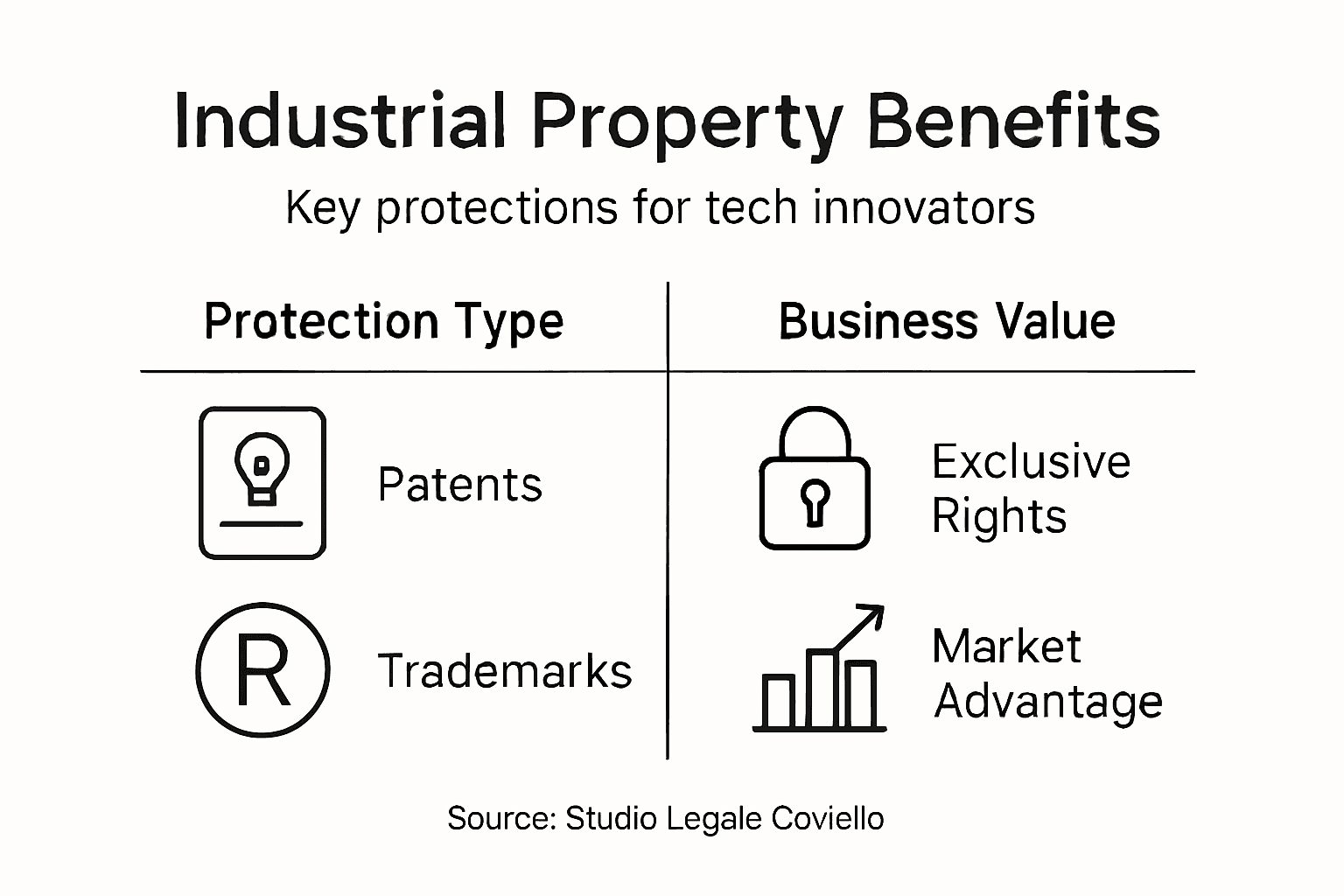
For technology sectors like food tech, gaming, and advanced manufacturing, industrial property rights represent more than legal documentation. They are strategic assets that enable companies to confidently invest in research and development, knowing their innovations are legally protected. These rights transform intangible creative ideas into tangible, defendable business assets that can be leveraged for long-term growth and market positioning.
Pro tip: Develop a comprehensive intellectual property strategy early, prioritizing protection for your most innovative and commercially promising technologies.
Risks, Costs, and Common Pitfalls
Industrial property management presents complex challenges that can significantly impact a technology startup’s strategic positioning. Navigating these potential risks requires sophisticated legal and financial planning to protect innovative assets effectively.
Key risks and potential pitfalls for tech entrepreneurs include:
High Registration Costs: Substantial financial investments required for comprehensive protection
Complex International Regulations: Varying legal standards across different jurisdictions
Enforcement Challenges: Significant expenses associated with defending intellectual property rights
Rapid Technology Obsolescence: Risk of patent values declining quickly in fast-moving tech sectors
Potential Litigation Expenses: Substantial legal costs for defending or challenging property rights
The financial implications of industrial property protection can be particularly demanding for early-stage technology companies. Patent filing, maintenance, and potential international registrations can cost thousands of dollars, creating substantial economic pressure for startups with limited resources. Entrepreneurs must carefully balance the cost of protection against potential commercial advantages, making strategic decisions about which innovations warrant comprehensive legal safeguards.
Technology sectors like food tech, gaming, and advanced manufacturing face unique challenges in industrial property management. The rapid pace of technological innovation means that protection strategies must be dynamic and forward-looking. Companies must continuously assess the commercial value of their intellectual assets, understanding that not all innovations justify the extensive costs and complexities of formal legal protection.
Pro tip: Prioritize protecting only your most commercially promising and technologically distinctive innovations to optimize your intellectual property investment strategy.
Secure Your Industrial Property Rights with Expert Legal Support
Understanding industrial property is the first step toward protecting your most valuable innovations, whether patents, trademarks, or industrial designs. If you face challenges such as navigating complex international treaties or managing high registration costs, you are not alone. Many technology entrepreneurs struggle to balance innovation with effective legal protection and enforcement.
At Studio Legale Coviello, we specialize in guiding businesses through these difficulties. Our experienced team uses advanced technologies including artificial intelligence and innovative digital tools to deliver efficient and tailored legal strategies — helping you safeguard your intellectual assets with confidence. Whether you operate in food tech, gaming, or advanced manufacturing, our consultancy ensures your industrial property rights support your growth and competitive edge.
Take control of your industrial property now. Visit https://studiolegalecoviello.com to discover how we turn complex challenges into clear opportunities for your company. Protect your innovations and unlock their full business potential with expert legal advice today.
Frequently Asked Questions
What is considered industrial property?
Industrial property refers to a category of intellectual property that protects innovations in commerce, including patents, trademarks, industrial designs, geographical indications, and service marks. These protections encourage innovation and fair competition in the market.
How do patents differ from trademarks in industrial property?
Patents protect technological inventions and processes, granting exclusive rights typically for 20 years, while trademarks protect brand identifiers and logos, providing indefinite (renewable) protection for brands to establish their reputation in the marketplace.
Why is understanding international treaties important for industrial property rights?
International treaties, like the Paris Convention and TRIPs Agreement, create standardized protections for intellectual assets across countries, making it crucial for innovators to navigate these frameworks when seeking global protection for their inventions.
What are the potential risks associated with industrial property management?
Key risks include high registration costs, complex international regulations, enforcement challenges, rapid technology obsolescence, and potential litigation expenses. Entrepreneurs must weigh these factors to make strategic decisions about protecting their innovations.
Recommended

Comments