


What Is Intellectual Property and Why It Matters
Updated: 6 days ago

Launching an innovative startup in Italy or scaling across European and United States markets puts your company’s ideas at risk the moment you go public. Without a clear grasp of what intellectual property law grants you in exclusive rights or which protections actually apply, founders often miss crucial legal safeguards. From patents to trademarks and trade secrets, the difference between growth and costly disputes lies in understanding the global rules—and busting misconceptions—before your competitors do.
Table of Contents
Key Takeaways
Point | Details |
Understanding IP Protection | Intellectual property encompasses patents, copyrights, trademarks, and trade secrets; each plays a vital role in safeguarding your innovations. |
Territorial Nature of IP | IP rights are territorial, requiring separate filings in each country to ensure protection; do not assume coverage from registration in one jurisdiction. |
Preventing Misconceptions | Awareness of ownership complexities and the importance of written agreements with employees and contractors can prevent costly disputes. |
Strategic Enforcement Planning | Develop a proactive IP enforcement strategy focused on key markets to manage infringement risks effectively and maintain competitive advantage. |
Intellectual Property Defined and Common Misconceptions
Intellectual property (IP) is fundamentally about protecting your creations and innovations. At its core, IP law grants exclusive rights to creators and inventors for their intangible creations to promote innovation and the spread of knowledge. For entrepreneurs building the next generation of Italian tech startups or scaling internationally, understanding what intellectual property actually is matters far more than you might initially think. Your competitive advantage often sits not in physical assets but in ideas, processes, designs, and brand identity that you’ve developed. Think of IP as a legal shield that prevents competitors from copying your unique work or stealing your competitive edge. The challenge is that many founders operate under misconceptions about how this protection actually works, especially when expanding beyond Italy into European markets or globally.
IP comes in four primary forms, each protecting different types of creations with distinct rules and protections. Patents protect inventions and give owners exclusive rights to make, use, or sell them for a limited time period. Copyrights protect original artistic and literary works, including software code, design files, and creative content that fuels today’s digital innovation economy. Trademarks protect symbols, names, and logos that distinguish your goods or services from competitors, making them invaluable as your brand scales internationally. Trade secrets involve confidential business information like algorithms, manufacturing processes, or client lists that provide competitive advantage but require active protection through confidentiality agreements. For startup founders developing food tech solutions, gaming platforms, or IoT monitoring systems in emerging markets like the UAE, recognizing which type of IP applies to your specific assets determines your protection strategy. A software startup might rely heavily on copyrights and trade secrets, while a hardware innovator needs patents. A consumer brand depends on trademark registration in every market where you operate.
Common misconceptions about IP protection often create costly gaps in your strategy. Many founders believe that filing a patent in one country like Italy automatically protects their invention worldwide, which is simply false. Patents are territorial, meaning you must file separately in each country or jurisdiction where you want protection. The same applies to trademark registrations and copyright protections across different regions. If you invent a promising agricultural technology and file only in Italy, someone in Germany or Singapore can legally replicate your exact design without penalty. Ownership complexity creates another frequent source of confusion, particularly with works created by employees or contractors. If your development team creates code, designs, or innovations during their employment, determining who actually owns that IP often requires written agreements clarified upfront. Many Italian startups skip this step and face disputes later when scaling. Additionally, trademark laws vary widely by jurisdiction, requiring individual registrations for meaningful global protection. A name that’s available and registrable in Italy might be taken in France or Spain. Misunderstandings about duration also trip up many entrepreneurs. Patents have specific lifespans (typically 20 years from filing), copyrights last the creator’s lifetime plus additional years depending on jurisdiction, and trademarks can theoretically last forever if you maintain them, but trade secrets disappear once the information becomes publicly known. Each type has different renewal requirements and protection windows that demand careful calendar management.
Pro tip: Before filing any IP protection, map exactly what intellectual property your startup actually owns—code, designs, brand assets, processes—and determine the appropriate protection type for each asset, then consult with a legal specialist experienced in international IP law to ensure your registrations cover all markets where you plan to operate or compete.
Here’s a concise comparison of the four major types of intellectual property and their unique characteristics:
Type of IP | What It Protects | Duration of Protection | Typical Business Impact |
Patent | Technical inventions | Up to 20 years (usually) | Exclusive market entry, licensing |
Copyright | Creative and software works | Life of creator plus decades | Monetizes creative output |
Trademark | Brand names, logos, slogans | Indefinite (with renewal) | Builds customer brand trust |
Trade Secret | Confidential business info | As long as secret is kept | Maintains competitive advantages |
Types of Intellectual Property Rights Worldwide
When you’re building a startup that could scale across multiple continents, you’ll encounter different types of intellectual property protection working together to safeguard your assets. Intellectual property encompasses patents, copyrights, trademarks, and trade secrets, each serving a distinct purpose and operating under different rules depending on where you do business. Understanding how these four categories work individually and sometimes overlap is essential for protecting everything your company creates. For Italian founders expanding into European markets, the United States, or emerging economies, this knowledge becomes your roadmap for determining what protection mechanisms to deploy and where to file them first.
Patents protect utilitarian inventions that are novel and useful, giving you exclusive rights to make, use, or sell your creation for a limited period (typically 20 years from filing in most countries). If you’ve developed innovative food tech processing equipment, an artificial intelligence algorithm for IoT monitoring, or a unique gaming engine mechanism, patents could be your primary protection. Copyrights protect original artistic and literary works, which includes software code, design files, architectural drawings, musical compositions, and written content that distinguishes your digital products. Unlike patents, copyrights protect original works automatically upon creation without requiring formal registration in many jurisdictions, though registration strengthens your legal position. Trademarks secure identifiers such as names, logos, slogans, and visual symbols that distinguish your goods and services in the marketplace. Your company name, product logo, brand colors, or distinctive tagline can all receive trademark protection. Trade secrets provide protection for confidential business information like customer lists, pricing strategies, manufacturing processes, or proprietary formulas that give you competitive advantage and require active confidentiality measures to maintain.

The application and scope of these rights vary considerably across different regions, creating complexity for international expansion. Some inventions may actually be covered by multiple types of IP protections simultaneously. Imagine you develop specialized agricultural sensor software. You might file a patent for the novel hardware mechanism, claim copyright over the underlying code and user interface design, trademark your brand name and logo, and treat your customer analysis algorithms as trade secrets. Different countries recognize different types of IP and apply various laws and durations of protection. The European Union offers design registration that protects the visual appearance of products, while some countries recognize geographical indications that protect regional specialties like “Parmigiano Reggiano.” Patent protection in the United States operates differently than in China, Japan, or India. Trademark duration varies dramatically; some jurisdictions require renewal every 10 years while others demand different schedules. Trade secrets never expire in many countries but vanish the moment your confidential information becomes publicly known, making protection mechanisms absolutely critical.
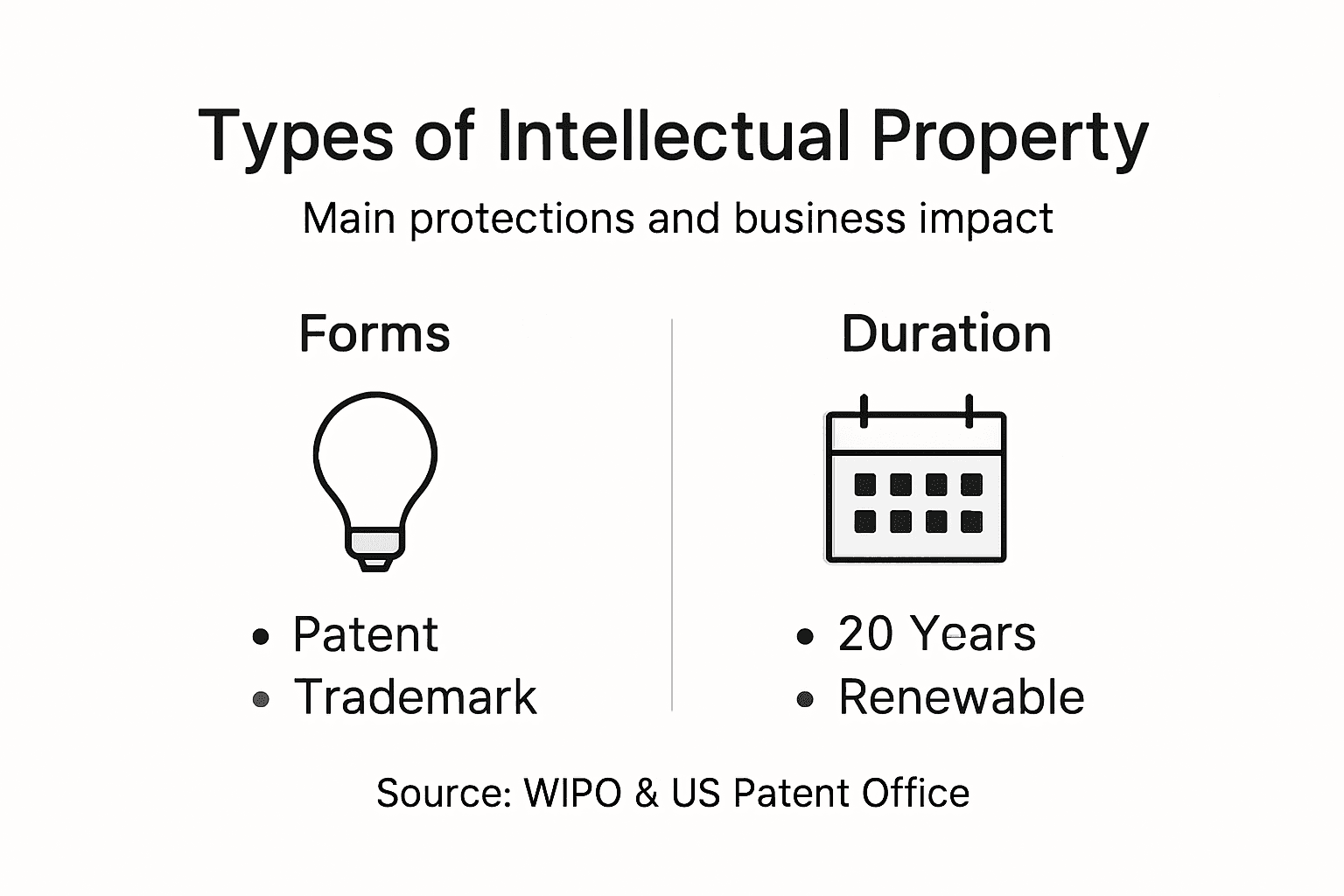
When developing your international IP strategy as a tech founder, recognize that filing a single patent application doesn’t protect you globally. You must make deliberate choices about which countries to prioritize for patent filing based on your market strategy and budget constraints. The Patent Cooperation Treaty (PCT) streamlines the process of filing in multiple countries, but it requires planning and timing. Similarly, you cannot register a trademark once and assume it’s protected everywhere. Each jurisdiction maintains its own trademark registry, and registrations require individual applications and renewal schedules in each country or regional system where you operate. Understanding this complexity upfront prevents costly gaps in your protection and ensures you’re not wasting resources filing in markets where you don’t actually compete. The global IP system reflects regional differences and international agreements that attempt to harmonize protections, but perfect uniformity doesn’t exist. Your legal strategy must account for these variations while maintaining consistent protection across your target markets.
Pro tip: Create an IP inventory spreadsheet documenting each asset your company owns (code, designs, brand elements, processes), assign the appropriate protection type to each asset, and prioritize filing in your top three markets based on revenue potential and competitive threat, then work with an IP specialist to coordinate filings using cost-effective mechanisms like the PCT for patents and Madrid Protocol for trademarks.
Legal Protections and International Frameworks
Your intellectual property doesn’t stop being valuable when you cross a border, but the legal frameworks protecting it absolutely do change. The international intellectual property system operates through a complex web of treaties, agreements, and organizations designed to harmonize minimum standards across countries while respecting local laws and commercial practices. For Italian tech entrepreneurs expanding globally, understanding these frameworks determines whether your innovation receives meaningful protection in your target markets or remains vulnerable to copying. The system isn’t perfect, but it provides the backbone for international IP enforcement that makes global scaling feasible. When you file a patent in Italy and plan to expand into Germany, France, the United States, or Southeast Asia, you’re navigating these international agreements that create predictable protection mechanisms across jurisdictions.
The World Intellectual Property Organization (WIPO) administers several foundational treaties that establish how countries cooperate on IP protection. TRIPS administered by the World Trade Organization sets minimum standards for IP protection across member countries, promoting innovation and international trade by creating baseline expectations that all participating nations must meet. The Berne Convention protects copyrights internationally, establishing the principle of national treatment meaning that countries grant foreign authors the same copyright protection they give to their own citizens. The Paris Convention covers industrial property including patents, trademarks, and industrial designs, allowing inventors to file in their home country and claim priority when filing in other member countries within specified timeframes. The Patent Cooperation Treaty (PCT) streamlines filing processes by allowing a single international application to be treated as national applications in multiple countries simultaneously, saving time and money for entrepreneurs pursuing patent protection across multiple markets.
These international agreements work by establishing principles and minimum standards while allowing individual countries to implement their own laws within those boundaries. National treatment means a country must protect foreign IP creators the same way it protects its own nationals. Most favored nation status means if one country receives favorable IP treatment from another, all signatory countries receive the same treatment. The system continues to evolve with new trade agreements adding “TRIPS-Plus” standards that often extend protections beyond the baseline requirements. Bilateral trade agreements between countries sometimes require stricter IP enforcement or longer protection periods than international treaties demand. The United States, for example, frequently negotiates stronger IP provisions in bilateral agreements with trading partners. However, enforcement and adaptation challenges remain significant, especially for developing countries attempting to balance intellectual property rights with access to knowledge and technology for their own citizens.
For a startup founder operating internationally, this means several practical realities shape your IP strategy. You cannot assume that registering a trademark or patent in one country automatically extends to others, even under these treaties. Filing decisions require deliberate planning about which countries matter most to your business model. The Madrid Protocol allows trademark registration in multiple countries through a single international application, making trademark expansion more manageable than it would be through individual country filings. Similarly, protection frameworks like the Berne Convention establish principles for cooperation and dispute resolution when IP disputes arise between countries. These agreements create legal certainty that makes international expansion less risky. When your Italian software company develops code that gets copied by a competitor in Germany, both countries recognize copyright protection through the Berne Convention, giving you legal grounds to enforce your rights. When your food tech innovation gets patented in multiple countries through the PCT, you have coordinated protection with consistent terms across jurisdictions. Understanding which treaties your target countries have signed determines what protections actually exist and what enforcement mechanisms you can access if violations occur.
Pro tip: Before expanding into new geographic markets, have an IP attorney review which international treaties govern IP protection in your target countries, then develop a filing strategy that prioritizes countries based on revenue potential and competitive threats, using cost-effective mechanisms like the PCT for patents and Madrid Protocol for trademarks to coordinate your filings and manage renewal calendars across multiple jurisdictions.
This table gives an overview of international IP treaties and their practical relevance for startups:
Treaty/Framework | What It Covers | Why It Matters to Startups |
Berne Convention | Copyright protection | Simplifies enforcing rights abroad |
Paris Convention | Patents, trademarks, designs | Enables claiming filing priority |
Patent Coop. Treaty | Patent filing coordination | Reduces effort for global patents |
Madrid Protocol | Trademark registration | Eases trademark protection expansion |
TRIPS | Minimum IP standards globally | Provides baseline for enforcement |
Real-World Uses in Tech and Innovation
Intellectual property protection isn’t an abstract legal concept confined to corporate lawyers and patent offices. It’s the mechanism that turns your innovative ideas into defensible business assets and competitive advantages. In the technology and innovation sectors where your target audience operates, IP strategy directly determines whether you can monetize your creations, attract venture capital, scale internationally, and ultimately build lasting company value. When you understand how real companies across different industries use IP protection strategically, you stop viewing IP as a compliance checkbox and start recognizing it as a fundamental business tool.
Consider the practical applications of IP in the sectors where Italian and international founders are innovating today. In software development, copyrights protect your code while patents safeguard novel algorithms and processes. A gaming company building the next breakthrough multiplayer experience needs copyright protection for the game engine, user interface design, and artistic assets, while patents might cover innovative gameplay mechanics or matchmaking algorithms that competitors could otherwise replicate. Food tech innovators developing alternative protein processing equipment or agricultural sensors file patents to protect their hardware innovations, use trademarks to build brand recognition for consumer products, and maintain trade secrets around proprietary formulas or manufacturing processes. Founders creating IoT monitoring systems for industrial applications in emerging markets like the UAE need patent protection for sensor technologies, copyright for software platforms, and trademarks for their brand positioning. The strategy isn’t choosing one type of IP protection. Successful innovators layer multiple types together, creating comprehensive protection that addresses different aspects of their business model.
The tangible impact of IP protection extends beyond wealthy industrialized nations. Geographical indications that increase product values demonstrate how IP strategies unlock economic potential across diverse markets. Cambodian pepper producers saw export prices increase substantially after trademarking their regional product as a distinctive offering in international markets. Ethiopian coffee benefited similarly through geographical indication protection, allowing producers to command premium prices by certifying the product’s regional origin. These examples show that IP protection works across economies at all development levels when applied strategically. A startup founder in an emerging market building agricultural technology can use IP protection to establish quality standards and brand recognition that justify premium pricing in developed markets. Geographic indications work similarly for Italian founders protecting regional specialties like specific food products, wine varieties, or crafted goods that gain value through trademarked regional authenticity.
For technology entrepreneurs specifically, understanding how IP creates business value changes your operational approach. Patents give your company negotiation leverage with larger competitors, potential licensing revenue streams, and defensibility against copycat products. When you’ve filed patents protecting your software architecture or hardware innovation, competitors must either design around your patents or license your technology, creating revenue opportunities beyond your core product sales. Trademarks become increasingly valuable as your user base grows. A gaming company’s trademark in its game title, character names, and visual identity becomes worth millions as the brand accumulates loyal users and merchandise potential. Copyrights protect digital assets you create that have permanent value. A software platform’s user interface design, documentation, and code remain protected throughout your company’s lifetime and potentially beyond. Trade secrets generate competitive advantage every single day your proprietary processes remain confidential. A food tech company’s manufacturing process for creating superior products at lower costs than competitors provides continuous advantage as long as that process stays secret through proper confidentiality agreements and restricted access.
The strategic question isn’t whether IP matters for your startup. It absolutely does. The question is whether you’ll invest in IP protection deliberately and comprehensively or discover gaps only when a competitor launches a knockoff product in an unprotected market or an employee walks away with your proprietary algorithms. For founders expanding internationally, the stakes increase dramatically. Without proper IP registration in your target markets, competitors operating locally can legally copy your innovations, undercut your pricing, and build market share in regions where you haven’t yet established presence. This happens regularly in technology sectors where enforcement is difficult and IP awareness is lower. The companies that navigate this successfully are those that planned their IP strategy before building their product roadmap, not after encountering competitive threats.
Pro tip: Before launching any product or expanding into a new geographic market, audit which intellectual property protections apply to your core innovations, identify which competitors could most easily copy you if your IP remained unprotected, then prioritize filing protections first in markets where competitive threats are highest and your business revenue is most concentrated.
Risks, Infringement, and Enforcement Strategies
Your intellectual property is under constant threat from multiple directions, and the landscape of that threat has transformed dramatically in recent years. Whether you’re a software startup, gaming company, food tech innovator, or hardware manufacturer, infringement risks range from straightforward product copying to sophisticated counterfeiting operations that undermine your market position and revenue. The digital age has made copying easier and faster than ever. Someone can replicate your software, reverse-engineer your hardware specifications, or clone your design and have it manufactured halfway across the globe within weeks. The challenge intensifies when you expand internationally because enforcement mechanisms vary radically across countries, creating jurisdictional gaps that infringers actively exploit. Understanding these risks and developing proactive enforcement strategies separates founders who lose control of their IP from those who maintain competitive advantage and legal defensibility.
Infringement takes multiple forms that founders often don’t anticipate until it’s too late. Direct copying occurs when competitors simply replicate your product, design, or code without authorization. Design-around attempts happen when competitors study your patent and try to create functionally similar products that technically avoid patent claims while achieving the same result. Counterfeiting involves creating fake versions of your branded products, often with inferior quality but at much lower price points that confuse consumers and damage your brand reputation. Trade secret theft occurs when employees or business partners share confidential information with competitors or start competing companies using your proprietary processes. Unauthorized licensing happens when distributors or manufacturers produce your branded products outside authorized channels, flooding markets with products you never approved. In the digital age, intellectual property faces heightened risks including widespread piracy, unauthorized reproduction, and infringement facilitated by online platforms where enforcement is challenged by the anonymous and borderless nature of the internet. A software company discovers their code on file-sharing sites within days of launch. A gaming company finds their game engine code on development forums shared openly. A food tech startup sees their formulation posted on manufacturing community websites. An IoT hardware manufacturer encounters counterfeit sensor devices being sold through online marketplaces at half their official price.
Enforcement of intellectual property rights across borders is exceptionally complicated and often fails without sophisticated strategy. Jurisdictional challenges mean that infringement occurring in one country requires enforcement through that country’s legal system, following its procedures, timelines, and evidentiary standards. What’s clearly infringement in Italy might require different proof in the United States or different remedies in Singapore. Differing national laws create situations where something protected under Italian copyright law might receive weaker protection in another jurisdiction, or trademark registration strong in Europe might mean nothing in Asia. Enforcement mechanisms vary dramatically. Some countries have specialized IP courts with judges experienced in patent disputes. Others route IP cases through general civil courts where judges lack specialized knowledge. Some countries prioritize criminal enforcement against counterfeiters while others focus on civil remedies. Cross-border enforcement of intellectual property rights is fraught with challenges including jurisdictional issues, differing national laws, and enforcement mechanisms that further complicate protection when digital technologies make copying and dissemination easier. The cost of enforcement compounds these challenges. International litigation is expensive, requiring attorneys in multiple jurisdictions and extended timelines. Many small startups cannot afford to pursue infringement cases internationally, even when clear violations occur.
Successful IP enforcement requires a multi-layered strategy that combines prevention, detection, and response. Prevention starts with comprehensive IP registration in your key markets before competitors have opportunity to infringe. Patents, trademarks, and copyrights registered proactively give you legal standing to enforce against violators. Technological protection involves using digital rights management systems, watermarking, encryption, and access restrictions that make copying technically difficult. A software company might use code obfuscation and licensing systems that prevent unauthorized use. A gaming company might implement anti-cheat systems and server-side validation that prevents local file modification. Monitoring requires active surveillance of online platforms, supply chains, and competitor activities to detect infringement early before it scales. Services exist that scan the internet for pirated content, counterfeit products on marketplaces, and unauthorized distribution channels. Response strategy should be predetermined and documented. When infringement is detected, you need clear escalation procedures ranging from cease-and-desist letters for minor violations to litigation for serious infringement that materially harms your business. Alternative dispute resolution mechanisms like arbitration and mediation can resolve disputes faster and cheaper than litigation. Some founders negotiate licensing agreements with infringers rather than fighting them in court, converting potential competitors into revenue sources.
For international expansion, enforcement strategy must match your market priorities. You cannot protect equally in every country, so focus your enforcement resources on markets where you have significant revenue, strong competitive presence, or unique vulnerability to counterfeiting. A software company might prioritize enforcement in the United States, Western Europe, and major Asian markets where enforcement mechanisms exist, while accepting higher piracy rates in markets with weaker IP protection. A luxury brand startup would prioritize enforcement against counterfeiting in high-income markets where counterfeits damage brand reputation most significantly. Digital startups increasingly use blockchain and distributed ledger technologies to create tamper-proof records of creation timestamps and ownership chains, creating evidence that supports enforcement claims. Cooperation with industry associations, law enforcement agencies, and border customs authorities can amplify enforcement impact without requiring individual company lawsuits. When multiple companies suffer the same counterfeiting operation, collective action becomes more feasible and cost-effective than individual enforcement.
Pro tip: Before launching internationally, develop an IP enforcement action plan that identifies your three highest-priority markets for protection, establishes monitoring procedures to detect infringement early, predetermines your response protocol ranging from cease-and-desist letters through litigation, and allocates specific budget for enforcement activities annually so you’re not caught unprepared when infringement inevitably occurs.
Protect Your Intellectual Property with Expert Legal Guidance
Understanding the complexities of intellectual property is crucial to securing your innovations against infringement and international challenges. If you are a startup founder or business owner aiming to safeguard your patents, trademarks, copyrights, or trade secrets across global markets, it is essential to have a tailored strategy that covers all aspects of IP protection and enforcement. The article highlights common pitfalls such as territorial limitations of patents, jurisdictional differences, and the urgent need for proactive enforcement in competitive industries like food tech, gaming, and IoT.

Don’t leave your valuable ideas vulnerable. Partner with Studio Legale Coviello, a specialized law firm offering comprehensive consultancy on intellectual property and international commercial law. Harness advanced technologies including AI-driven legal tools and innovative mobile apps designed for efficient IP rights management. With expertise in strategic patent filing, trademark registration under the Madrid Protocol, and customized enforcement plans, they guide Italian and international clients through the global IP landscape. Take the first step toward maximizing your assets’ value and protecting your competitive edge now by visiting Studio Legale Coviello. Explore how their expert team turns complex IP challenges into clear opportunities for your business growth.
Frequently Asked Questions
What is intellectual property?
Intellectual property (IP) refers to legal rights that protect creations of the mind, such as inventions, literary and artistic works, designs, symbols, names, and images used in commerce.
What are the main types of intellectual property protections?
The four primary forms of intellectual property protections are patents, copyrights, trademarks, and trade secrets. Each serves a distinct purpose in safeguarding different types of creations.
How does registering a trademark work?
Registering a trademark involves applying through the relevant trademark authority, providing necessary information about the brand name or logo, and demonstrating that it distinguishes your goods or services from those of others. Registration offers legal protection and exclusive rights to use that trademark.
Why is it important to understand intellectual property as a startup founder?
Understanding intellectual property is crucial for startup founders because it helps protect their unique ideas and creations from being copied, thereby safeguarding their competitive advantage and potential revenue streams.
Recommended

Comments