


Why Enforce IP Rights: Safeguarding Innovation Globally

Launching a breakthrough solution in global technology markets comes with intense competition and frequent risks to your innovative ideas. For international tech entrepreneurs in fast-evolving fields like food tech and gaming, understanding Intellectual Property (IP) Rights is vital to build long-term business value while navigating complex legal frameworks. This guide clarifies the true purpose of IP rights, corrects common myths, and reveals how proper enforcement protects startups and creators worldwide.
Table of Contents
Key Takeaways
Point | Details |
Understanding IP Rights | Intellectual Property Rights protect creative works and incentivize innovation across various sectors. They encompass Patents, Trademarks, Copyrights, and Trade Secrets. |
Common Myths | Misconceptions exist about IP rights primarily benefiting large corporations and blocking collaboration. In reality, they support all innovators, including startups and individual creators. |
Strategic IP Protection | Different types of IP protection serve unique purposes. Innovators should choose mechanisms based on their specific innovation models and long-term business strategies. |
Effective Enforcement is Crucial | Strong IP enforcement fosters economic growth and innovation. Weak protections can lead to financial risk, reduced investor confidence, and hindered market positions for businesses. |
Defining IP Rights and Common Myths
Intellectual Property (IP) Rights represent legal protections designed to safeguard creative and innovative works across global technology sectors. These rights extend far beyond simple ownership, serving as strategic mechanisms to encourage ongoing innovation while balancing public and private interests.
At their core, IP rights cover several critical domains:
Patents: Protecting novel technological inventions
Trademarks: Securing brand identities and logos
Copyrights: Defending original creative expressions
Trade Secrets: Preserving confidential business methodologies
Contrary to popular misconception, IP rights are not just about restricting access but creating frameworks that incentivize global innovation. International agreements like TRIPS play a crucial role in establishing standardized protections that enable creators to share groundbreaking ideas while maintaining appropriate compensation mechanisms.
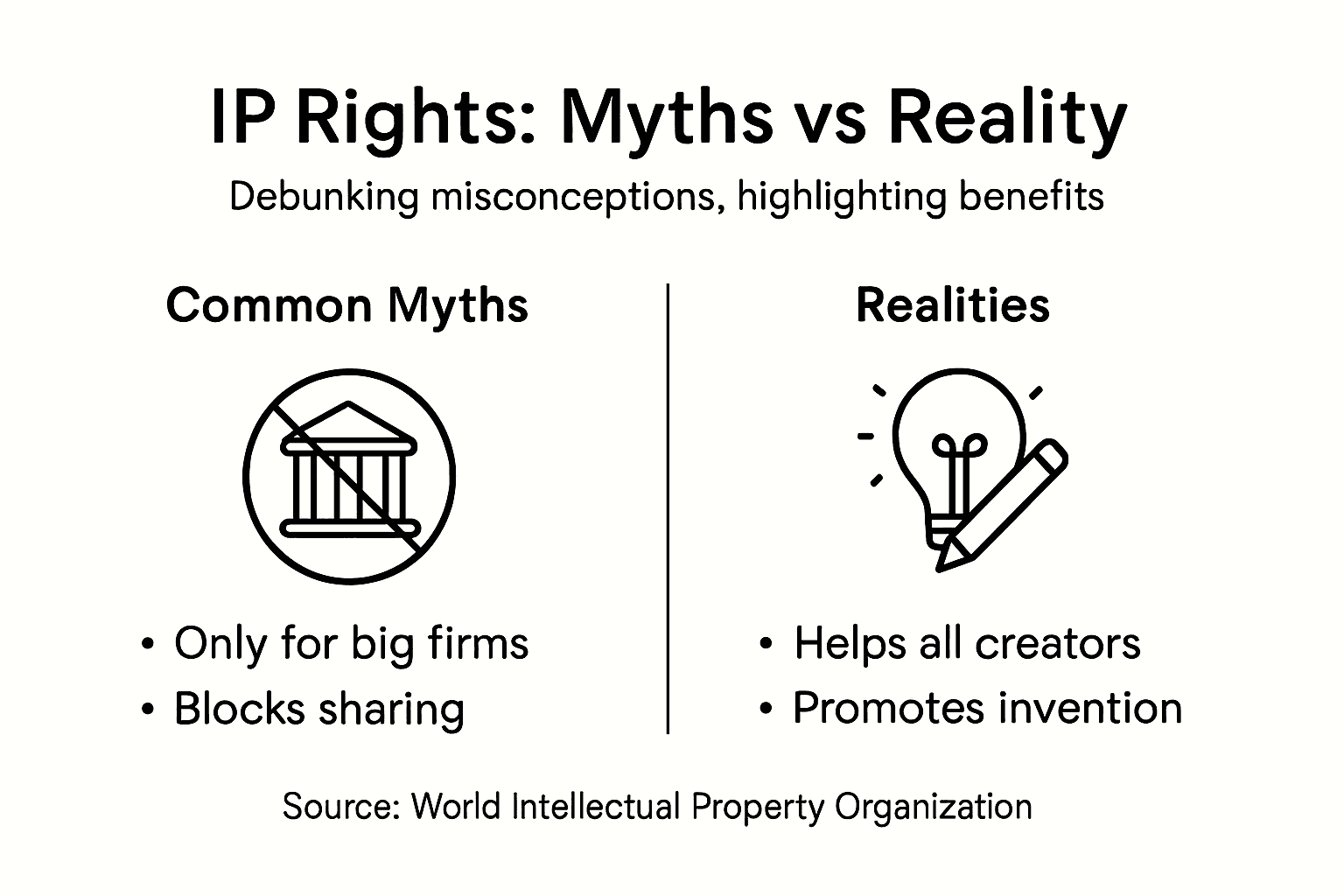
Common myths surrounding IP rights often stem from misunderstandings about their fundamental purpose. Many entrepreneurs incorrectly believe these protections solely benefit large corporations, when in reality, they provide critical support for startups and individual innovators. Intellectual property frameworks are designed to create balanced ecosystems where creativity can flourish without undue restrictions.
The landscape of IP protection continues evolving, particularly in technology-driven sectors like food tech and gaming, where innovation cycles move at unprecedented speeds. Entrepreneurs must understand that IP rights are not static barriers but dynamic tools for strategic business development.
To clarify common misconceptions, below are some prevalent myths about IP rights versus the reality:
Myth | Reality | Who Benefits |
Only big businesses gain | Startups and creators also benefit | All innovators |
IP blocks collaboration | IP promotes fair sharing | Inventors, partners |
Protection is automatic | Strategic steps are required | Active managers |
Ideas are too small for IP | Protections fit all innovation sizes | Entrepreneurs, SMEs |
Pro tip: Always conduct comprehensive IP audits before launching new products to identify potential protection strategies and mitigate future legal risks.
Types of IP Protection for Innovators
Innovators in technology-driven sectors like food tech and gaming have multiple strategic options for protecting intellectual property rights. Understanding these protection mechanisms is crucial for maintaining competitive advantages and securing long-term business value.
The primary types of IP protection include:
Patents: Exclusive rights for technological inventions
Provides 20-year protection
Requires public disclosure of innovative details
Applicable to novel technological solutions
Trademarks: Protection for brand identities
Safeguards logos, names, and brand symbols
Can be renewed indefinitely
Prevents unauthorized use of brand elements
Copyrights: Defense of creative expressions
Protects original artistic and literary works
Automatically applied upon creation
Typically lasts creator’s lifetime plus additional years
Trade Secrets: Preservation of confidential business information
Maintains competitive business strategies
No time limitation if secrecy is maintained
Requires active protection and confidentiality measures
Each protection type serves unique strategic purposes for entrepreneurs. Patents encourage technological disclosure by offering inventors exclusive commercial rights, while trademarks provide brand recognition and consumer trust. Copyrights protect creative works, ensuring creators can monetize their intellectual contributions.

Technology startups must carefully evaluate which IP protection mechanisms align best with their specific innovation models. The selection depends on the nature of the intellectual asset, potential commercial applications, and long-term business strategy.
Here’s a concise overview comparing the main forms of intellectual property protection and their strategic value for innovators:
Type of IP Protection | Best For | Business Impact | Typical Duration |
Patent | Novel inventions | Enables market exclusivity | 20 years (fixed) |
Trademark | Brand identity | Strengthens consumer trust | Indefinite (renewable) |
Copyright | Creative works | Secures monetization rights | Lifetime plus additional years |
Trade Secret | Confidential processes | Maintains competitive edge | Unlimited (while secret) |
Pro tip: Consult with intellectual property experts to develop a comprehensive protection strategy tailored to your specific technological innovation and business objectives.
Legal Framework Governing IP Enforcement
The global landscape of intellectual property protection relies on a complex network of international legal frameworks that establish standardized enforcement mechanisms across different jurisdictions. These intricate systems aim to protect innovators’ rights while promoting technological advancement and cross-border collaboration.
Key international treaties and agreements that form the backbone of IP enforcement include:
Berne Convention: Protecting artistic and literary works
Paris Convention: Safeguarding industrial property rights
TRIPS Agreement: Establishing minimum global IP protection standards
World Intellectual Property Organization (WIPO) Treaties: Harmonizing international IP regulations
National enforcement mechanisms typically involve multiple layers of protection:
Civil Enforcement
Legal actions for monetary damages
Injunctions preventing further infringement
Compensation for intellectual property violations
Criminal Enforcement
Prosecuting intentional IP theft
Imposing criminal penalties for systematic infringements
Border Control Measures
Preventing counterfeit goods from entering markets
Intercepting unauthorized intellectual property reproductions
Technology-driven sectors like food tech and gaming face unique challenges in IP enforcement. The rapid pace of innovation requires adaptive legal frameworks that can quickly respond to emerging technological developments and potential infringement strategies.
Emerging Technologies and IP Protection
Blockchain, artificial intelligence, and digital platforms are transforming how intellectual property rights are monitored and enforced. These technologies enable more sophisticated tracking of IP usage, providing innovative tools for detecting and preventing unauthorized exploitation of creative assets.
Pro tip: Develop a proactive IP monitoring strategy that combines legal expertise with technological tracking mechanisms to protect your intellectual assets effectively.
Key Benefits of Enforcing IP Rights
Enforcing intellectual property rights delivers profound strategic advantages for innovators and businesses across technology-driven sectors. Global economic impact of IP protection extends far beyond legal compliance, creating comprehensive ecosystems that stimulate innovation and economic growth.
Key benefits of robust IP rights enforcement include:
Economic Stimulation
Encourages continued investment in research and development
Creates financial incentives for technological innovation
Supports sustainable business models
Innovation Protection
Safeguards unique technological developments
Prevents unauthorized reproduction of creative assets
Maintains competitive advantages
Market Confidence
Builds trust among investors and stakeholders
Demonstrates organizational professionalism
Signals commitment to intellectual asset management
Technology startups in sectors like food tech and gaming particularly benefit from strategic IP enforcement. These dynamic industries rely on continuous innovation, where protecting intellectual assets becomes crucial for maintaining market positioning and attracting potential investors.
Competitive Advantage Mechanisms
By establishing clear boundaries around intellectual property, organizations create powerful deterrents against potential infringements. This proactive approach not only protects existing innovations but also signals a sophisticated approach to technological development and legal strategy.
Economic and Strategic Implications
Strong IP enforcement mechanisms contribute to broader economic resilience. They motivate researchers and entrepreneurs to invest time and resources into groundbreaking projects, knowing their intellectual contributions will be legally protected and commercially viable.
Pro tip: Develop a comprehensive IP audit process that regularly evaluates and updates your intellectual property protection strategies to maintain maximum legal and economic effectiveness.
Risks of Weak or Absent Enforcement
The absence of robust intellectual property protection creates significant vulnerabilities for innovative businesses across technology sectors. Weak IP enforcement mechanisms expose entrepreneurs to potentially devastating economic and competitive risks.
Critical risks associated with inadequate IP protection include:
Financial Vulnerabilities
Potential revenue loss from unauthorized use
Reduced investor confidence
Diminished market valuation
Innovation Disincentives
Decreased motivation for research investment
Higher likelihood of idea theft
Erosion of competitive advantages
Market Disruption
Increased prevalence of counterfeiting
Undermined brand integrity
Compromised consumer trust
Technology-driven sectors like food tech and gaming are particularly susceptible to these risks. Startups investing significant resources in developing innovative products can quickly lose competitive advantages without proper intellectual property safeguards.
Competitive Landscape Implications
Weak IP enforcement creates an environment where original creators are systematically disadvantaged. Competitors can easily replicate successful innovations without facing meaningful legal consequences, fundamentally undermining the principles of fair market competition.
Global Economic Impact
Beyond individual business risks, ineffective IP protection generates broader economic challenges. Developing economies especially suffer from reduced foreign investment and limited technological knowledge transfer when intellectual property rights remain poorly defined or inconsistently enforced.
Pro tip: Implement comprehensive IP monitoring systems that proactively track potential infringements and establish clear legal strategies for rapid response.
Costs and Critical Compliance Factors
Managing intellectual property rights requires a strategic approach to understanding and navigating complex financial and legal landscapes. IP rights enforcement expenses represent significant investments that demand careful calculation and strategic planning.
Key cost considerations for IP rights enforcement include:
Direct Litigation Expenses
Legal filing fees
Attorney consultation costs
Court administrative charges
Monitoring and Prevention Costs
Regular infringement tracking systems
Technological surveillance tools
Periodic legal compliance audits
Settlement and Negotiation Expenses
Potential licensing agreement negotiations
Mediation and arbitration fees
Potential settlement compensation
Technology-driven sectors like food tech and gaming face unique compliance challenges. Startups must balance limited financial resources with the need for comprehensive intellectual property protection, requiring innovative and cost-effective enforcement strategies.
Strategic Compliance Management
Successful IP rights management goes beyond mere financial investment. It requires developing robust internal processes that proactively identify, assess, and respond to potential intellectual property risks while maintaining alignment with competition laws.
Cost-Benefit Analysis
Entrepreneurs must continuously evaluate the potential return on investment for IP enforcement actions. Not every infringement warrants legal action, and strategic decision-making involves carefully weighing potential financial and reputational outcomes.
Pro tip: Develop a tiered IP enforcement strategy that prioritizes high-impact violations while maintaining flexible, cost-effective monitoring mechanisms.
Protect Your Innovation with Expert IP Legal Support
The article highlights the crucial challenge many innovators face in navigating complex intellectual property rights and enforcement. Protecting patents, trademarks, copyrights, and trade secrets is vital to safeguard your competitive edge and secure your business’s future. Without effective enforcement strategies, you risk financial losses, weakened innovation incentives, and damaged brand integrity. Understanding these risks and benefits is the first step toward a strong intellectual asset protection plan.
At Studio Legale Coviello, we specialize in providing tailored legal and technical consulting for businesses and individuals who want to maximize the value of their IP assets. Our expertise covers everything from international patent protection to trademark registration and digital copyright management. With a clear focus on innovation-driven sectors such as food tech and gaming, we use advanced technologies including artificial intelligence and innovative digital tools to enhance the efficiency and effectiveness of your IP enforcement actions.

Ready to secure your intellectual property and unlock greater business potential? Visit our website now to explore how our international legal services and cutting-edge solutions can empower your innovation. Don’t let weak IP enforcement put your success at risk. Act today with Studio Legale Coviello and confidently protect your creative future.
Frequently Asked Questions
What are IP rights and why are they important?
IP rights are legal protections that safeguard creative and innovative works, including patents, trademarks, copyrights, and trade secrets. They are important because they encourage innovation by giving creators exclusive rights to their inventions, thus facilitating economic growth and competition.
How does enforcing IP rights benefit technology startups?
Enforcing IP rights provides technology startups with market exclusivity, protects their unique innovations, and enhances investor confidence. It also helps prevent unauthorized use of their ideas, which can lead to increased revenue and sustainability.
What are common myths about intellectual property rights?
Common myths include the belief that only big businesses benefit from IP rights and that they block collaboration. In reality, IP rights also support startups and creators while promoting fair sharing and innovation within the industry.
What are the risks of weak IP enforcement?
Weak IP enforcement can lead to financial vulnerabilities, decreased motivation for innovation, and market disruption due to counterfeiting. Startups may lose their competitive edge and face challenges in attracting investment if their IP rights are not effectively protected.
Recommended

Comments